The main points
- Seals are sighted on a regular basis at Jökulsárlón Glacier Lagoon, often as dark shapes resting on the bergs.[1]
- Jökulsárlón is 248 meters (814 feet) deep, which makes it the deepest lake in Iceland.[2]
- Clear ice breaks off Breiðamerkurjökull, drifts through the lagoon and washes up on Diamond Beach.[3]
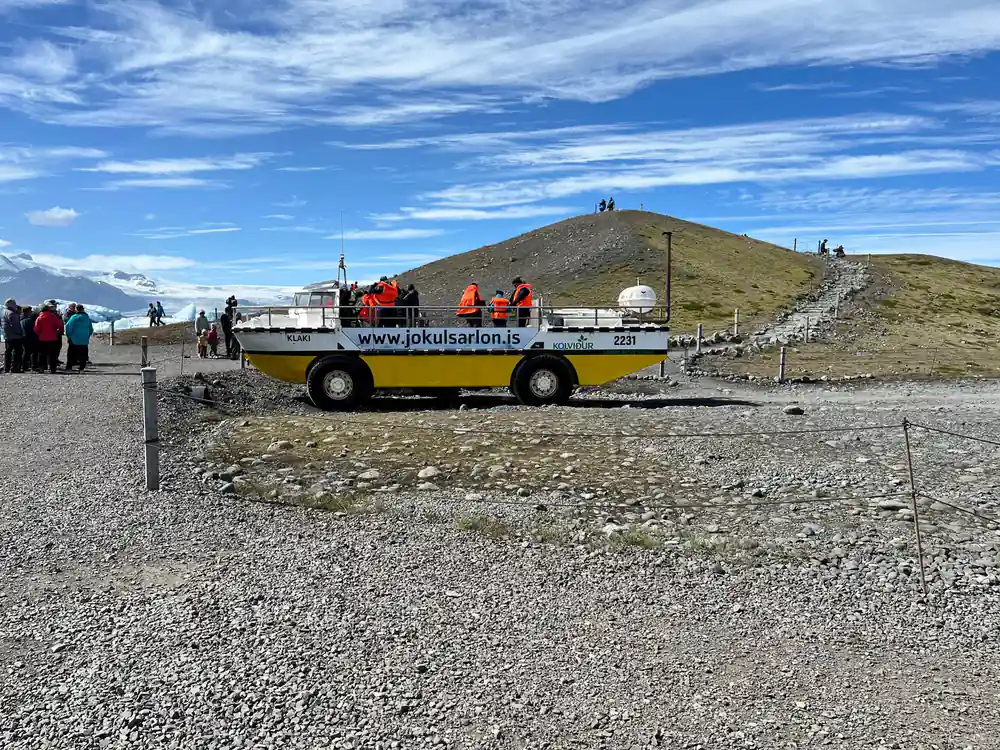
- The amphibian boat tour season runs May-Nov and the trip takes 30-40 minutes.[4]
- Jökulsárlón is 236 miles (380 kilometers) east of Reykjavík along Route 1, a five-hour direct drive.[5]
- Top choice Jokulsarlon & Diamond Beach from US$232 Duration14 hours[6]Ratingrated 4.67[6]Reviews3,935 reviews[6]CancellationFree up to 24 hours before[6] Check availability
- South Coast & Diamond Beach from US$231 Duration14.5 hours[7]Ratingrated 4.54[7]Reviews1,494 reviews[7]CancellationFree up to 24 hours before[7] See this tour
- Glacier Lagoon with boat from US$232 Duration14 - 15 hours[8]Ratingrated 4.55[8]Reviews1,424 reviews[8]CancellationFree up to 24 hours before[8] See this tour
Similarly, seals are also sighted on a regular basis at neighbouring Jökulsárlón. As at Fjallsárlón, you might see them at a distance from the shore but you’ll be able to get nearer to them from out on the water.
Worth it for the wildlife, not just the ice
Prepare for the day
- Book the Reykjavik day tour ahead in summer, when departures fill first.
- Expect a long day out: the drive down is slow and the return gets you back late.
- Compare the plain day tour with the boat and glacier versions before you book.
- Cancel up to 24 hours before departure for a full refund[6]
From Glacier to Sea: How the Lagoon Works
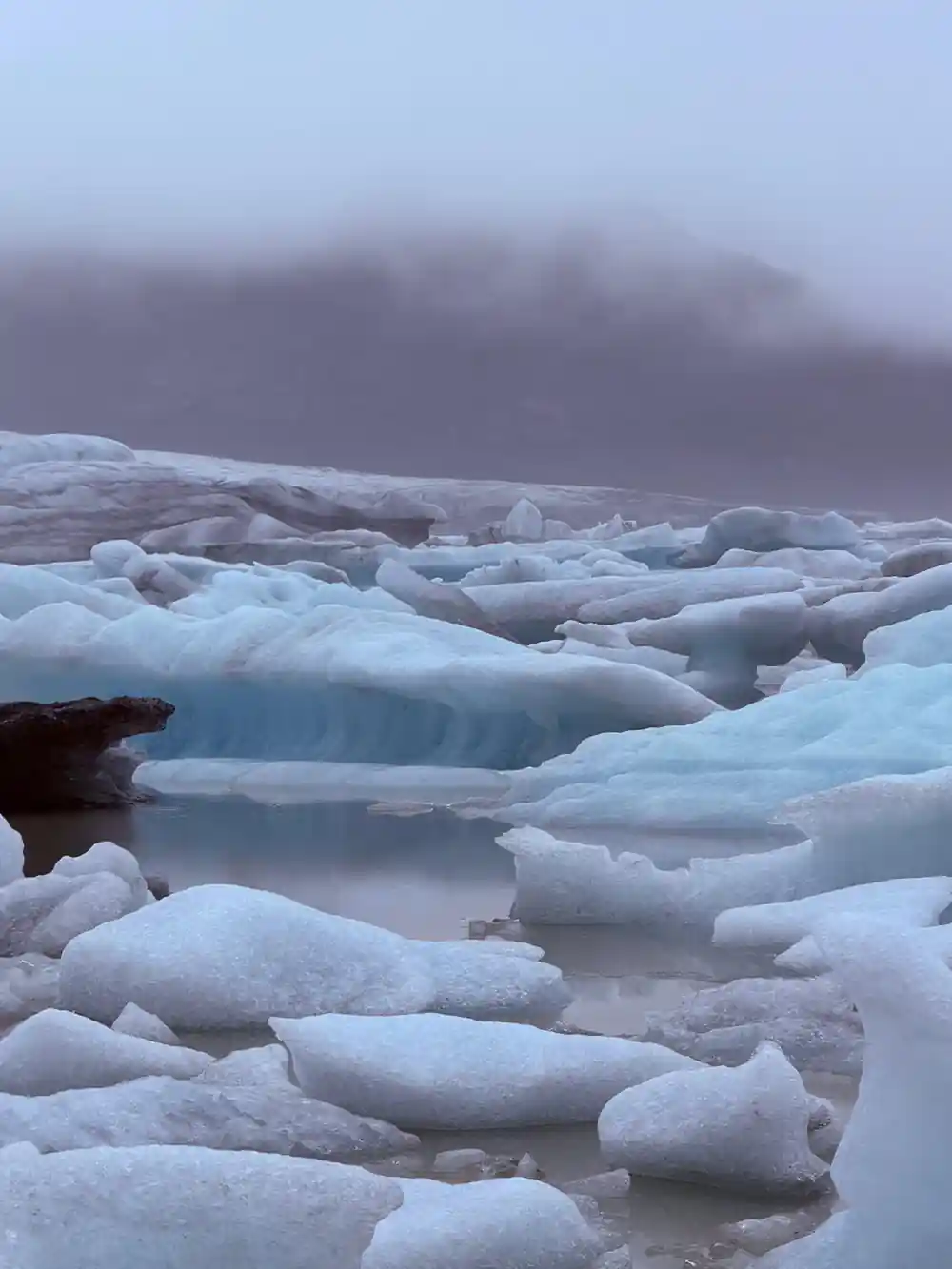
Jökulsárlón sits where an arm of the Vatnajökull ice cap reaches down toward the coast. Breiðamerkurjökull is the Vatnajökull outlet glacier that feeds Jökulsárlón glacier lagoon[10], and the ice that breaks off its face is the whole show: it calves, floats, cracks, rolls and drifts slowly toward the sea. At 248 meters (814 feet) deep, Jökulsárlón is the deepest lake in Iceland[2]. That sounds like a trivia line until you stand at the edge and realise how much dark water sits under the bright pieces you can actually see.
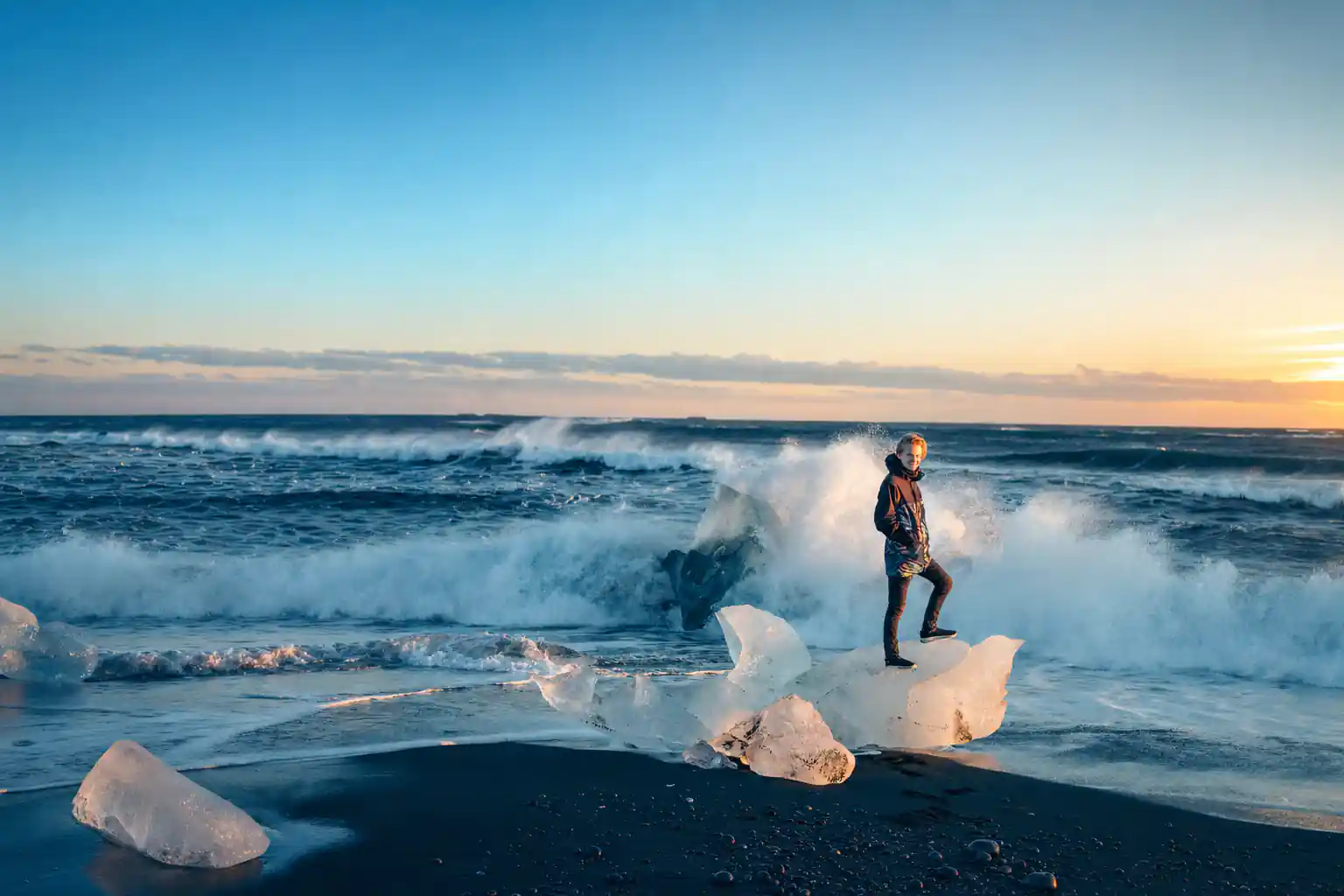
The lagoon is not a still pool. Cold meltwater and the tide meet in the short channel that links it to the Atlantic, so bergs wander out and some of them come straight back. Diamond Beach is a black volcanic sand beach in Southeast Iceland scattered with clear glacial ice that breaks off from the Breiðamerkurjökull outlet glacier, drifts through Jökulsárlón Glacier Lagoon, and washes ashore along the coast[3]. On a bright morning the ice on the black sand looks lit from within, and the birds and seals you came for are often working that same stretch of shore.
Seals of the Iceberg Lagoon
Seals are what turn a lagoon full of ice into a place with residents. They are sighted on a regular basis at Jökulsárlón Glacier Lagoon on Iceland's south coast[1], usually as smooth dark shapes hauled out on a floe or drifting with their heads up. From the bank you tend to see them at a distance; from a boat on the water you can get nearer[1]. Binoculars change everything here, because a grey lump on white ice becomes an animal with whiskers, an eye and a clear opinion about your presence.
Glacier lagoon seals are not performers. They sleep, roll off a berg and reappear somewhere else, and long minutes pass with nothing to see at all. Patience pays: scan the ice edges slowly, especially near the channel where the current keeps the water moving and the surface is never quite still. If you are out on a boat, put the camera down for a while and just watch the water. Nothing guarantees a sighting, which is part of why one feels like a gift.
If you want better odds of seeing animals up close, get out on the water. The amphibian boat tour season at Jökulsárlón runs May-Nov and the trip takes 30-40 minutes[4], long enough to reach the ice and short enough to stay comfortable. The Zodiac Boat Tour is priced from 16,900 ISK, and the boat tour lasts 1 hour 15 minutes, with total duration about 2 hours[11]. Both put you lower and nearer the bergs than the shore ever will. Spray is part of the deal, so bring a waterproof layer and something to wipe the lens.
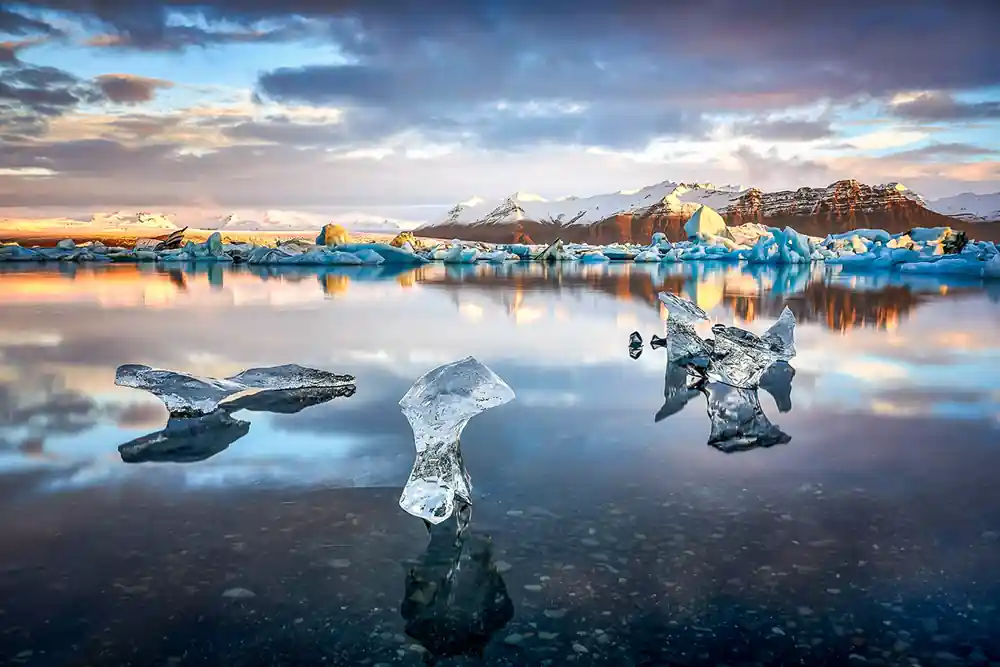
Ice gathers in the lagoon before it drifts out, rolls in the surf and lands on the black sand.
Arctic Terns and the Summer Sky
Arctic terns are the small, sharp-winged birds that nest along Iceland's coast, and they treat the air over the lagoon as theirs. They hover, drop, and if you walk too close to a nesting patch they will dive at your head with a loud rattling complaint. It is not aggression for its own sake; they are defending eggs and chicks on open ground with no cover at all. A hat, a calm retreat and a wide berth solve the whole problem.
Terns feed by plunge-diving, folding their wings back and hitting the water in a white splash. Watch them work the channel and you will see where the water is liveliest, which is often where seals are hunting below. They are long-distance migrants, and the birds wheeling over the lagoon have crossed an ocean to get here. Stay on the paths, give nesting colonies plenty of room, and let the birds show you where their boundaries are.
Skuas, Gulls and the Scavengers Above
Great skuas are the heavy brown birds that patrol the lagoon with obvious intent. They are pirates by habit, chasing other seabirds until they drop a meal, and taking eggs, chicks and scraps when they can. You will often see one bullying a gull or a tern across the water while everything else scatters out of the way. It is not cruelty; it is simply an efficient way to make a living on a coast where the productive months are short and busy.
Gulls are the birds everyone ignores and the ones you can actually identify, and they do much of the tidying up around the water. After a big piece of ice rolls over, watch the air above the channel; anything edible stirred up by the splash gathers a crowd of wings within moments. This is the easiest place to start birdwatching here. Find a spot out of the wind, look for movement over the water, and let the noise tell you what is happening.
from US$232
The Reykjavik: Jokulsarlon Glacier Lagoon and Diamond Beach tour runs 14 hours with a live guide in English[6]
Whales and the Coast Beyond Diamond Beach
The lagoon is only part of the story. Iceland's south coast shelves quickly into deep water, and offshore you are in whale country, with minke whales and harbour porpoise working the bays and humpbacks appearing in the warmer months. From the road, a distant spout or a dark back breaking the surface is your clue. The one-way distance from Vík to Jökulsárlón Glacier Lagoon is 192 kilometers (118 miles)[12], so if you are driving yourself, give that stretch real time instead of treating it as a transfer.
Scan from the headlands and from the black sand beaches where the road runs close to the sea, and keep an eye out when you stop at Diamond Beach, because the water beyond the surf drops away fast. If cetaceans are a priority for your trip, plan them from a harbour with a dedicated boat rather than hoping for one from the lagoon, and treat anything you see from the coast as a bonus. The lagoon has appeared in A View To A Kill, Die Another Day and Lara Croft: Tomb Raider[13], and the landscape still refuses to be upstaged.
The Food Web: From Light to Predators
Everything here starts with meltwater and light. Glacial water carries fine rock flour that scatters sunlight and gives the surface its milky blue-grey, while clearer ocean water moves in on the tide. Where the two meet, plankton blooms, small fish and krill gather, and that is what draws in the rest: terns diving, gulls squabbling and seals hunting under the ice. You do not need a boat to see the pattern. Stand on the bank for a few minutes and watch which part of the channel the birds keep working.
The animals here are one system rather than a list of separate sights, and the season decides what you see. Winter changes the mood completely, and ice caves in the Vatnajökull region are only accessible during the winter months, from November and usually throughout March, depending on the weather[14]. In the warmer half of the year the water is busy, and kayaking is allowed on Jökulsárlón Glacier Lagoon during the summer season[15], which puts you at eye level with the bergs and, if you are lucky, with a seal surfacing nearby.
Best Practices for Wildlife Watching
Watching wildlife well here is mostly about distance and patience. Keep well back from seals hauled out on the ice, never place yourself between an animal and the water, and resist the urge to take one step closer for a photograph. Birds on nests are more sensitive than they look, and a colony that flushes because of you leaves eggs exposed to skuas and gulls. Keep voices low, keep dogs away, and if an animal changes what it is doing because of you, that is your signal to back off.
Comfort matters more than equipment. Public toilets and a café are available at the lagoon[9], and Hotel Jokulsarlon is an accommodation option near the lagoon if you would rather not drive back the same night[16]. Jökulsárlón is 236 miles (380 kilometers) east of Reykjavík along Route 1, with a five-hour direct drive or seven to eight hours with South Coast sightseeing stops[5], so most visitors join a guided day from the city. Dress for wind and rain, bring sunglasses and a cloth for the spray, and let the weather decide how long you stand still.
Traveller ratings for Jokulsarlon day tours from Reykjavik
Ratings as listed on GetYourGuide for these four Reykjavik departures[6][7][8][17]
From-prices in US dollars for four Jokulsarlon listings
From-prices in US dollars per person on these GetYourGuide listings[6][7][17][18]
When the lagoon's wildlife seasons run
Plan your wildlife day
Pick your day tour
The Reykjavik day tour covers the long drive south and the main stops in one go[6]
Add time on the water
Boat trips on the lagoon are seasonal and short, so build one into the day if you want to be on the water.
Pack for wind
Windproof shell, hat, gloves, sunglasses and a cloth for the spray that comes off the ice.
Watch, do not chase
Keep a respectful distance from seals and nesting birds, and keep voices low near the ice.
Stay for the light
Ice and water change character as the sun drops, and late afternoon often gives the calmest light.
See the lagoon and its seals on a guided day from Reykjavik
from US$233Reserve now & pay later