The main points
- The Breiðamerkurjökull outlet glacier feeds Jökulsárlón, and the ice that breaks off drifts across the water before washing up on the coast.[1][2]
- Jökulsárlón is 248 meters (814 feet) deep and is the deepest lake in Iceland.[3]
- The amphibian boat tour season runs May-Nov and trips take 30-40 minutes, while the Zodiac boat tour lasts 1 hour 15 minutes.[4][5]
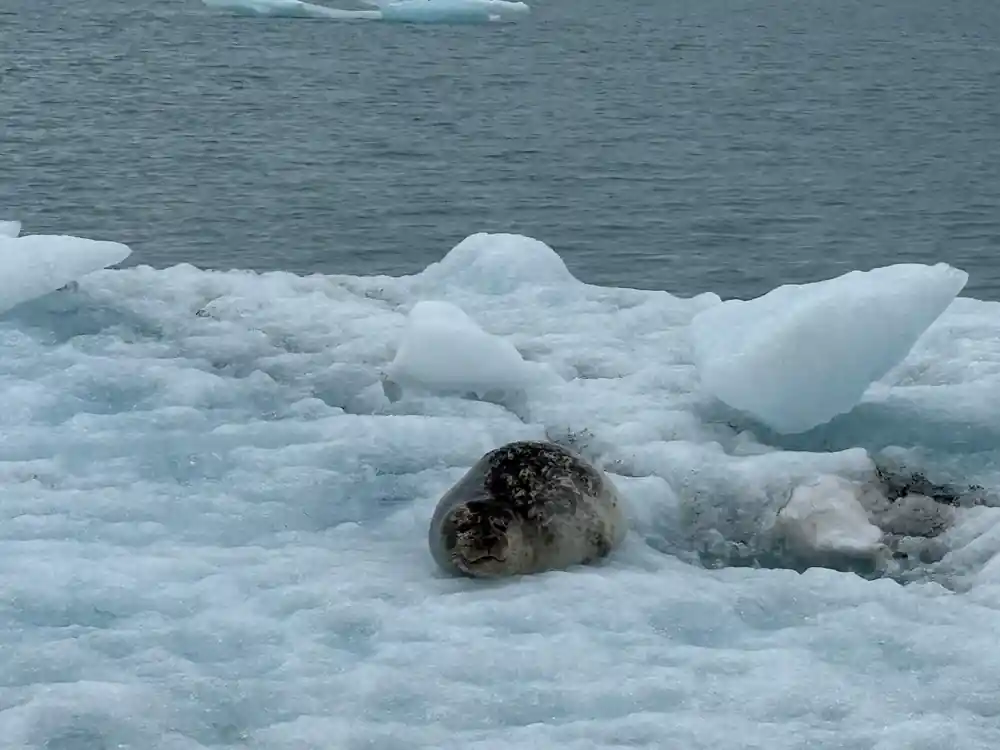
- Seals are sighted on a regular basis at Jökulsárlón, from the shore or, closer, from a boat.[6]
- Jökulsárlón is 236 miles (380 kilometers) east of Reykjavík along Route 1, a five-hour direct drive from the city.[7]
- Top choice Lagoon & Diamond Beach tour from US$232 Duration14 hours[8]Rating4.67 from 3,935 reviews[8]GuideLive tour guide in English[8]CancellationUp to 24 hours before[8]Pay laterReserve now & pay later[8] Check availability
- South Coast & Diamond Beach from US$231 Duration14.5 hours[9]Rating4.54 from 1,494 reviews[9]GuideLive tour guide in English[9]CancellationUp to 24 hours before[9]Pay laterReserve now & pay later[9] See this tour
- Boat ride & Diamond Beach from US$288 Duration14 hours[10]Rating4.61 from 268 reviews[10]GuideLive tour guide in English[10]CancellationUp to 24 hours before[10]Pay laterReserve now & pay later[10] See this tour
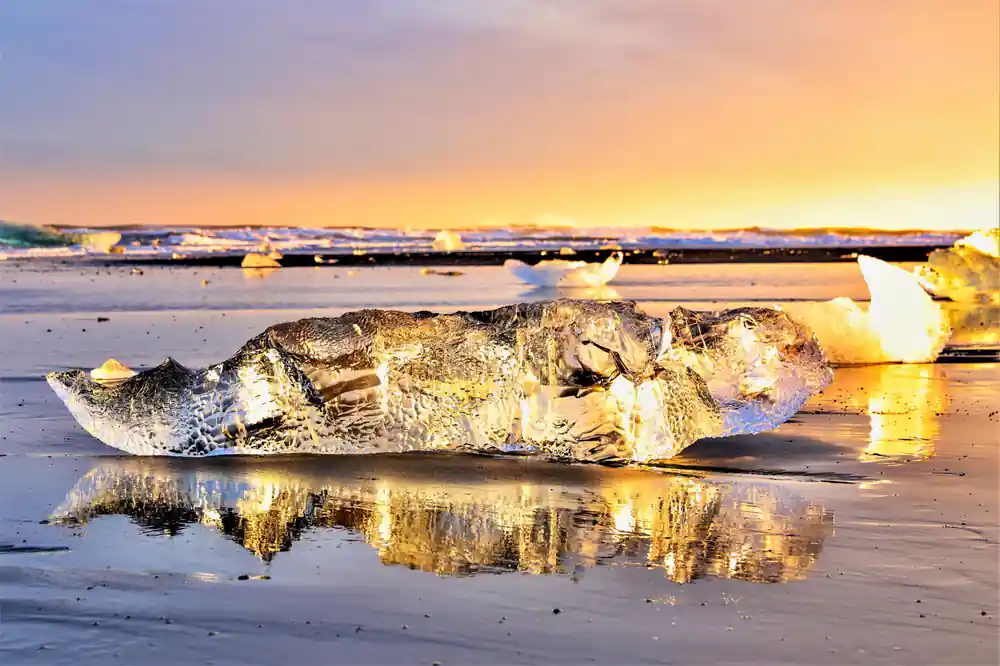
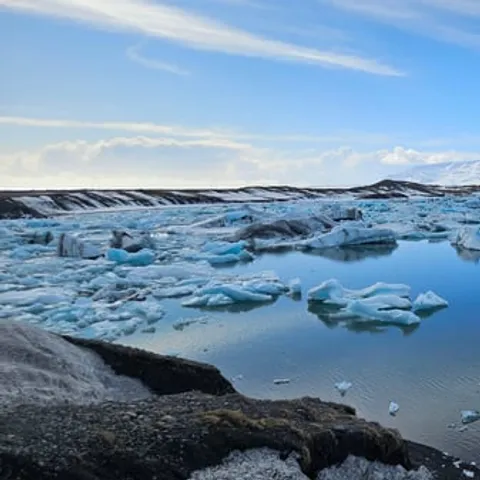
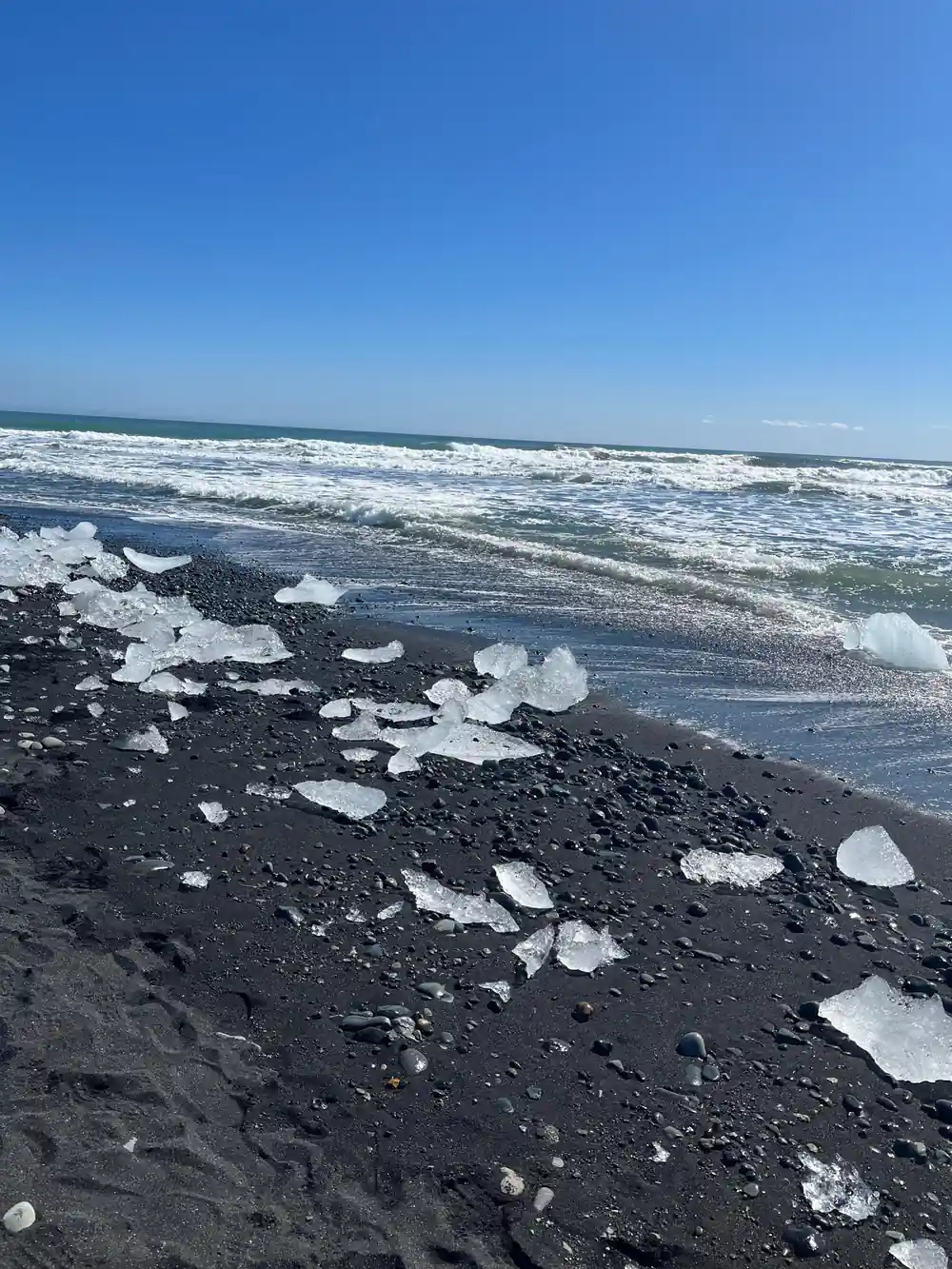
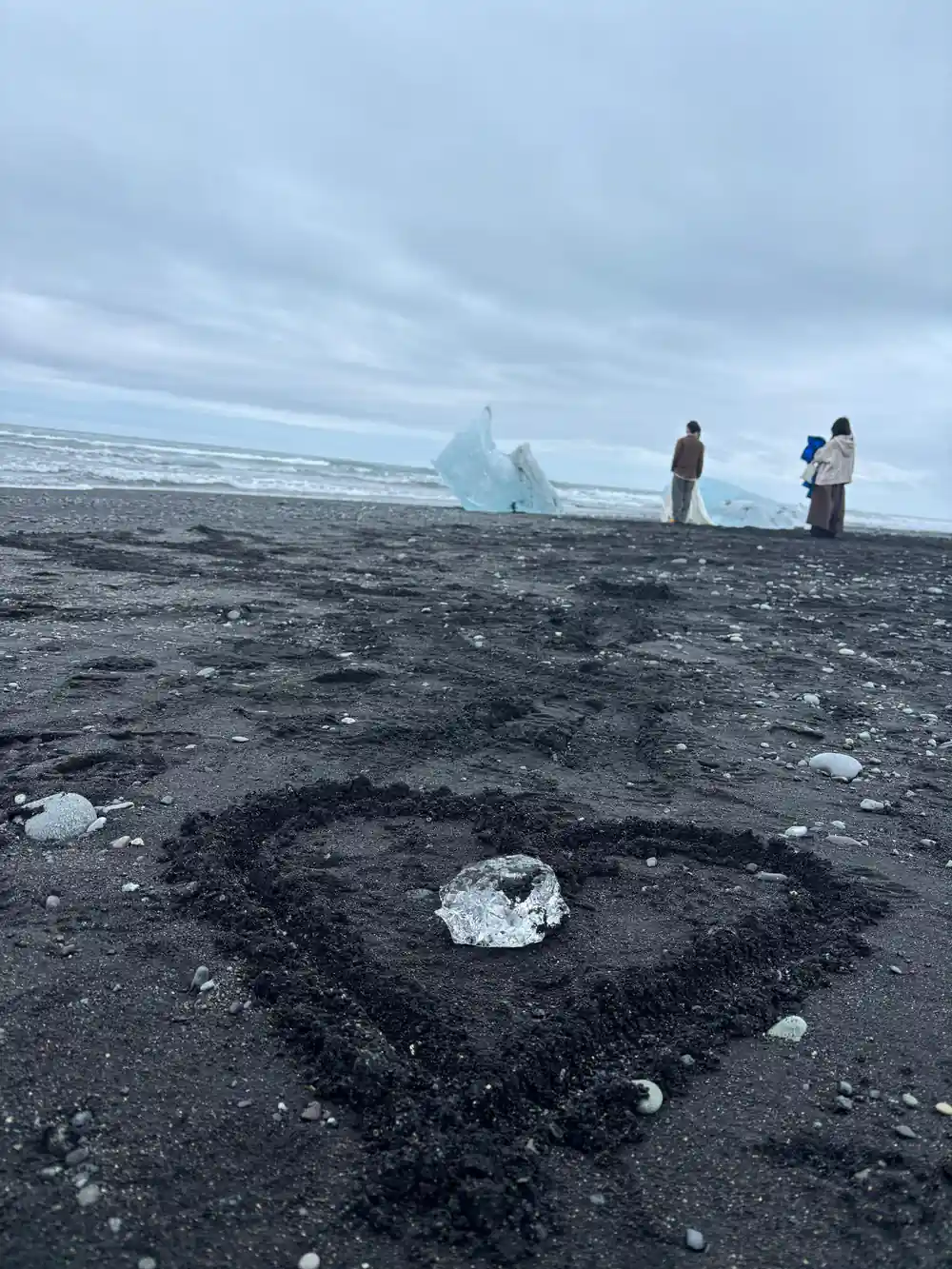
Diamond Beach in Southeast Iceland is known for its black volcanic sand scattered with clear glacial ice. These ice fragments break off from Breiðamerkurjökull, an outlet glacier of the Vatnajökull ice cap, drift through Jökulsárlón Glacier Lagoon, and wash ashore along the coast.
Is the Jökulsárlón day tour worth it?
Pre-booking checklist
A Lagoon Born From Glacial Retreat
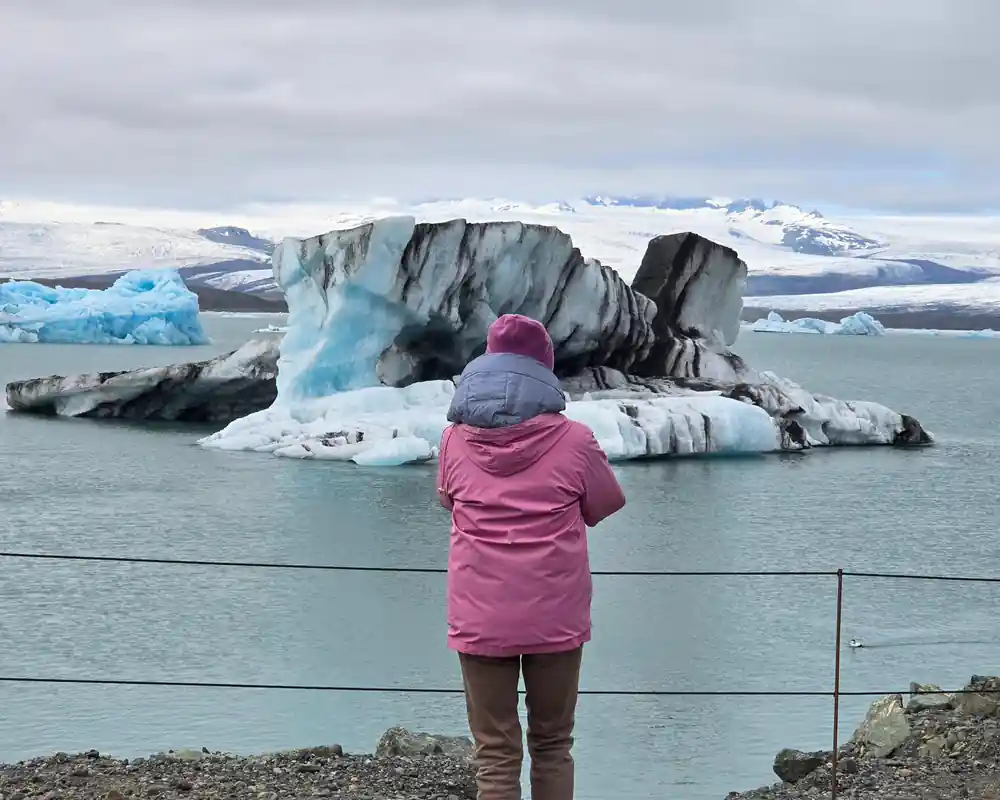
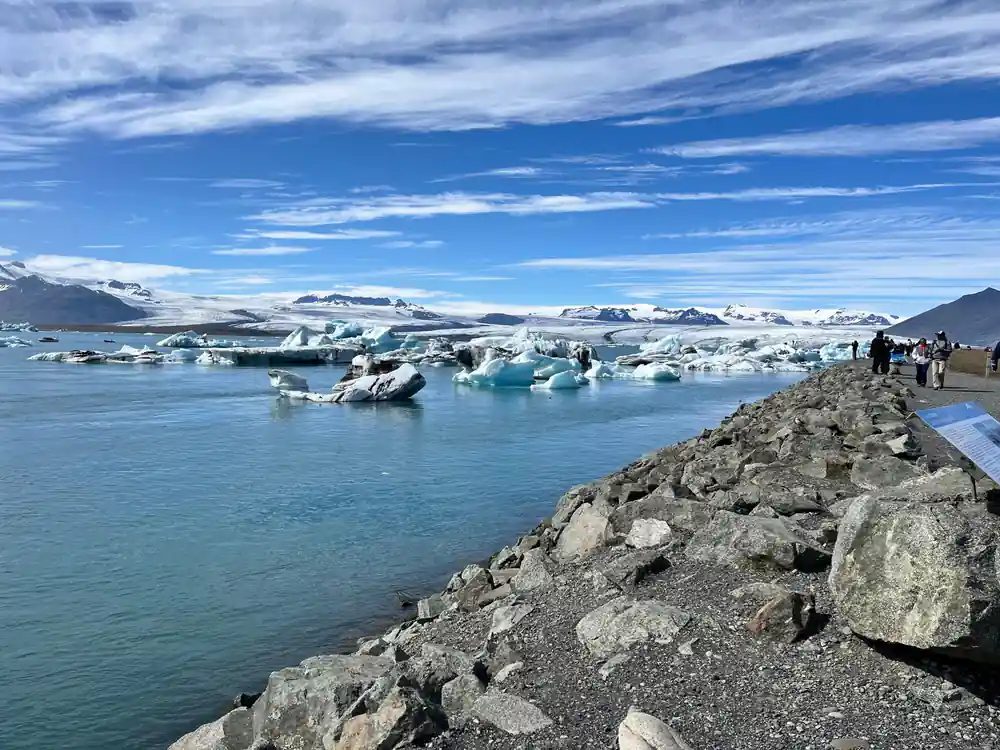
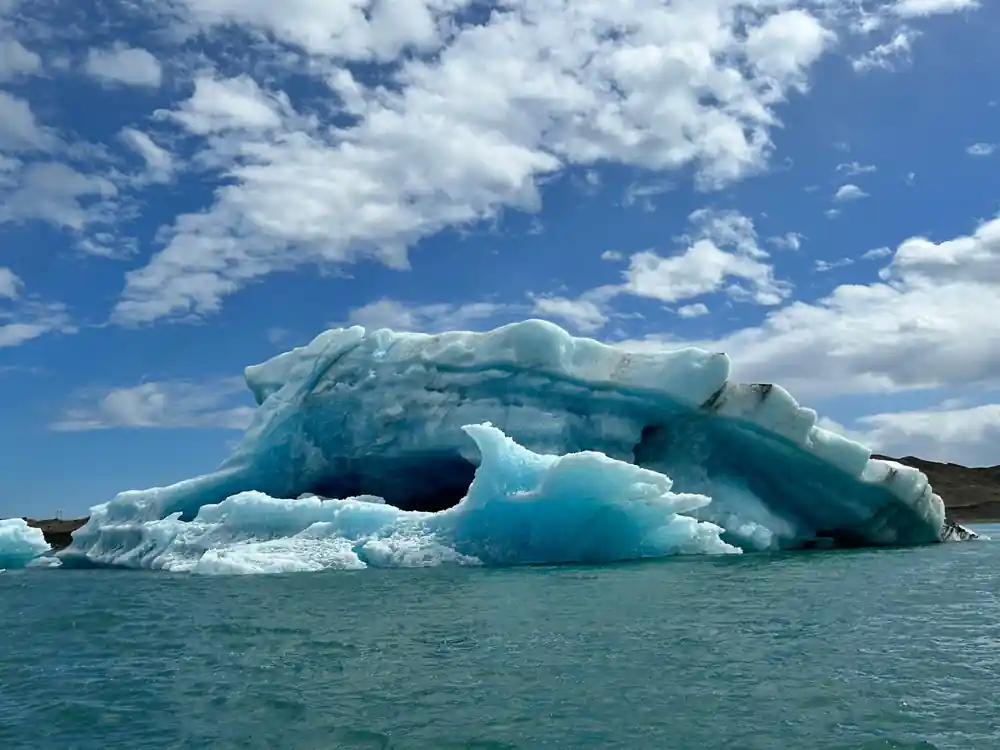
Jökulsárlón was not always here. Breiðamerkurjökull, an outlet of the Vatnajökull ice cap, is the glacier that feeds the lagoon.[1] As the ice pulls back from the coastal plain, meltwater fills the hollow it leaves behind, and blocks of ice break off the glacier's edge and drop into the water. What you see from the shore is a wide, grey-blue sheet carrying white and blue shapes that shift with every tide and every breath of wind.
So how old is Jökulsárlón glacier lagoon? There is no single birthday to mark. This is a landscape that is still being rearranged, and the water you look at today lies on ground the glacier has given up. The ice arriving on it is old ice, formed high on the ice cap long before it travelled down to sea level. New water, ancient ice: that contrast is the whole appeal of the place, and no two visits look alike.
Depth and the Tidal Pull of the Ocean
Jökulsárlón is 248 meters (814 feet) deep and is the deepest lake in Iceland.[3] From the shore the water looks shallow and milky, and the depth is easy to forget until a berg turns over and vanishes. A short channel links the lagoon to the Atlantic, and the tide moves in and out of it, taking smaller pieces of ice out to sea and pushing others back onto the sand.
Getting here takes a real day. Jökulsárlón is 236 miles (380 kilometers) east of Reykjavík along Route 1, a five-hour direct drive or seven to eight hours with South Coast sightseeing stops.[7] From Vík the lagoon is 192 kilometers (118 miles) one way.[14] Many people cover the distance by coach and let someone else watch the road. If you drive yourself, the journey is part of the trip: waterfalls, black sand beaches and a broad, empty plain that goes on longer than you expect.
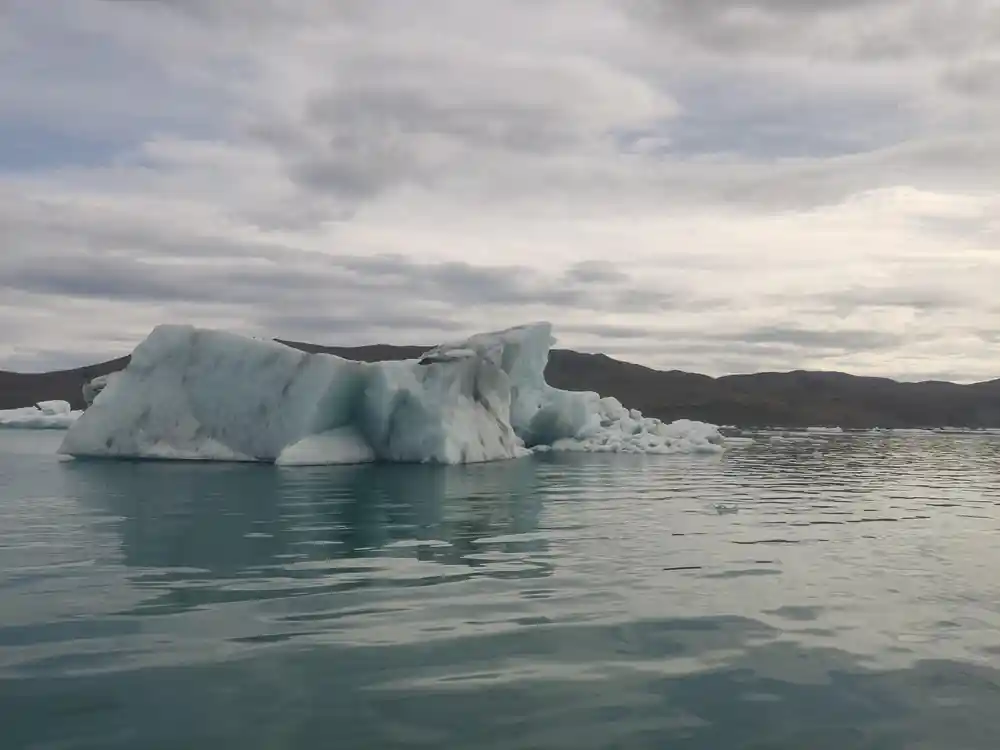
Ice from Breiðamerkurjökull drifts across the lagoon and washes up on the black sand at Diamond Beach.
The Age and Electric Blue of Glacier Lagoon Ice
The ice in the lagoon is not the bright white of a fresh snowball. Glacial ice is squeezed under the weight of the ice cap until most of the air has been pressed out of it, and light that enters it travels a long way before it comes back out. Older, denser pieces look blue, fresher ones look white, and the glacier lagoon floating ice changes character hour by hour as chunks turn, melt and split apart in the current.
Ice that breaks off Breiðamerkurjökull drifts through the lagoon and washes ashore along the coast, where it collects on the black volcanic sand of Diamond Beach.[2] Some chunks are clear as glass, some are milky, and some carry a dark band of sand frozen inside them like a stripe. The tide decides what is lying there on any given morning, so the beach can look completely different from one hour to the next.
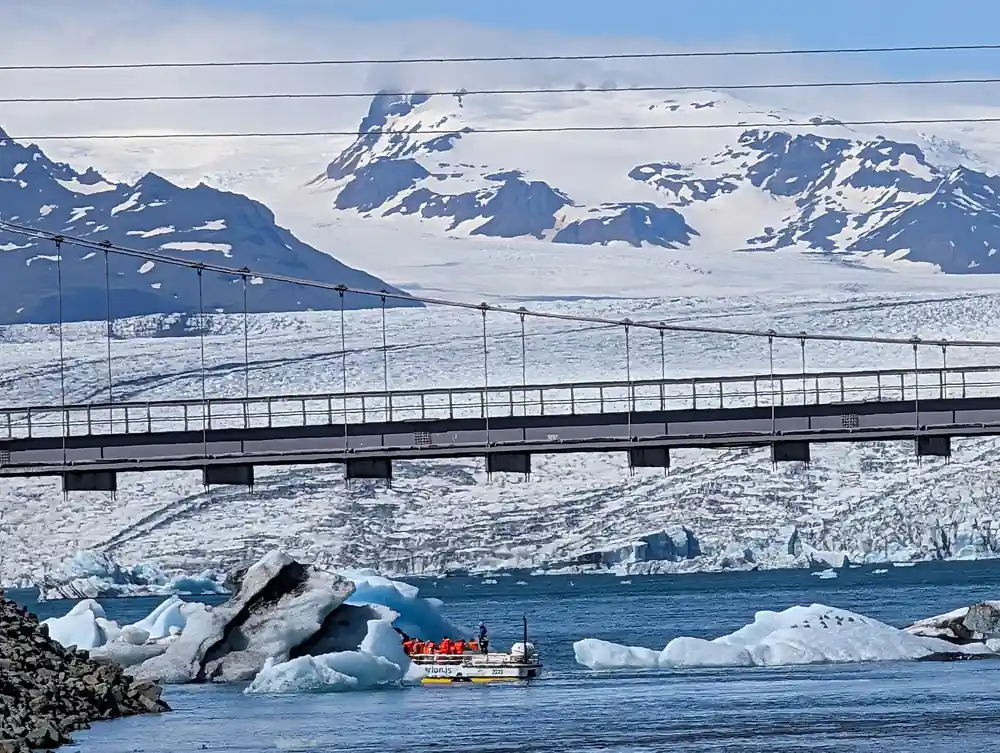
Getting out on the water is the other half of a visit. At Jökulsárlón the amphibian boat tour season runs May-Nov and the trip takes 30-40 minutes.[4] The Zodiac Boat Tour is priced from 16,900 ISK, and the boat tour lasts 1 hour 15 minutes, with total duration about 2 hours.[5] Kayaking is allowed on Jökulsárlón Glacier Lagoon during the summer season.[15] Ice caves in the Vatnajökull region are only accessible during the winter months, from November and usually throughout March, depending on the weather.[12]
Wildlife Among the Icebergs
Seals are sighted on a regular basis at Jökulsárlón Glacier Lagoon on Iceland's south coast.[6] They rest on the ice and swim between the bergs, and you can often pick them out from the shore as a dark head in the water. Watch for the roll and the splash that follows a dive. The river mouth and the shallows near Diamond Beach are busy with birds too, and gulls and waders line the black sand at low tide.
The trick with wildlife is patience and quiet. The animals here are used to people at a distance but not to noise, so keep your voice down and move slowly along the shore. Binoculars help, and a camera with a little reach will do more for you than a phone. Early morning and late evening are calmer and emptier, which suits both the seals and anyone hoping for a photograph without a crowd in it.
248 m deep
Jökulsárlón is the deepest lake in Iceland, and the ice drifting on it comes from the Breiðamerkurjökull outlet glacier.[1][3]
Hollywood Discovers a Glacier Lagoon
Film crews have used Jökulsárlón Glacier Lagoon for A View To A Kill, Die Another Day, and Lara Croft: Tomb Raider.[16] The look is recognisable: white ice on dark water, black sand under a low sun, a horizon that shifts with every cloud. Standing on the shore you can pick out the kind of shapes that ended up on screen, the flat pans, the narrow channels between bergs and the long, glassy light of a late afternoon.
It pays to think about timing. If you are driving yourself, aim for the early or the late hours, when the light is long and the car park is quiet. If you are on a day tour from Reykjavík, you go with the schedule you are given, so use the time well and walk a little further along the shore than the car park crowd does.
How to Pronounce Jökulsárlón
The name looks like a keyboard accident, and it is easier than it seems. Icelandic usually stresses the first syllable, so start strongly with the "Jö", which sounds like the "yu" in yurt said with rounded lips. Then a short "kul", then "sar", then "lone" with a long o. Said quickly and evenly it comes out roughly as YUH-kul-sar-lone. You do not need to roll anything or growl.
You will hear Icelanders shorten it in everyday speech, and you will also hear the English version, something like Yokulsarlon, which is understood perfectly well along the South Coast. The neighbouring names follow the same pattern: Breiðamerkurjökull, the glacier that feeds the lagoon, and Vatnajökull, the ice cap above it. Nobody minds a wobble in the middle of a word, and pointing at a map works just as well.
Planning Your Visit to the Lagoon
Public toilets and a café are available at Jökulsárlón.[11] Weather on the South Coast turns quickly, so layers, a waterproof outer shell and shoes with grip are worth more than an umbrella. In winter the paths and the beach can be icy, and the wind off the water is cold even on a bright day. Give yourself more time here than you think you need, and keep some of it for standing still.
A day tour from Reykjavík is the usual way to see the lagoon. The Jökulsárlón Glacier Lagoon and Diamond Beach tour runs 14 hours, with pickup available and options to check when you book, and free cancellation up to 24 hours in advance for a full refund.[8] If you would rather wake up near the ice, Hotel Jokulsarlon is an accommodation option in the Icelandic countryside near the lagoon.[13] Either way, keep the day loose and the camera charged. Some of the best stops on the South Coast are the ones nobody planned.
How long Jökulsárlón tours last
GetYourGuide durations: 14 hours[8], 14 hours[10], 3 hours[17], 3 hours[18], 1.5 hours[19].
What lagoon tours cost from
US dollar from-prices on GetYourGuide listings: US$232[8], US$288[10], US$164[18], US$159[19], US$132[17].
When to go to Jökulsárlón
Plan your Jökulsárlón day
Check the season
Boat tours run May-Nov, ice caves are a winter trip, and kayaking happens in summer.[4][12][15]
Book the day tour
A day tour from Reykjavík covers the drive and the stops, and runs about 14 hours.[8]
Choose your add-on
A Zodiac or amphibian boat trip gets you closer to the floating ice than the shore does.[5]
Pack for wet weather
Layers, a waterproof shell and shoes with grip beat an umbrella on the South Coast.
Walk both shores
The lagoon shore and Diamond Beach sit a short walk apart, and the ice moves with the tide.[2]
Ride the South Coast to Jökulsárlón and Diamond Beach
from US$233Reserve now & pay later