The main points
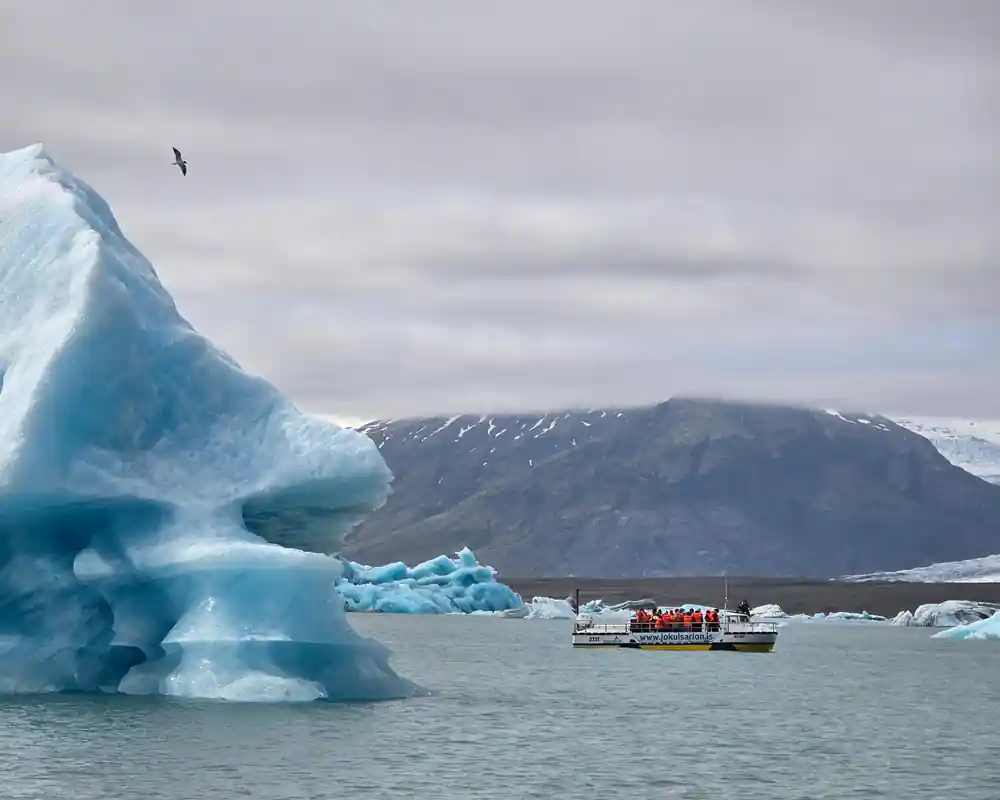
- The amphibian boat tour season at Jökulsárlón runs May-Nov, with trips of 30-40 minutes.[1]
- Kayaking is allowed on the lagoon in the summer season, and the guided kayak tour takes 1.5 hours.[2][3]
- Ice caves in the Vatnajökull region are only accessible from November and usually throughout March, depending on the weather.[4]
- The tour booked from this site runs for 14 hours from Reykjavík, with free cancellation up to 24 hours in advance.[5]
- Jökulsárlón is 236 miles (380 kilometers) east of Reykjavík along Route 1, a five-hour direct drive or seven to eight hours with sightseeing stops.[6]
- Top choice Glacier Lagoon Day Tour from US$232 Duration14 hours[5]Live guideEnglish[5]Free cancellationUp to 24 hours in advance[5]Main stopsHvolsvöllur, Kirkjubæjarklaustur, Jökulsárlón, Vik Check availability
- South Coast & Diamond Beach from US$231 Duration14.5 hours[7]Live guideEnglish[7]Free cancellationUp to 24 hours in advance[7]Main stopsSkógafoss, Eyjafjallajökull, Jökulsárlón See this tour
- Lagoon with Boat Tour from US$232 Duration14 - 15 hours[8]Live guideEnglish[8]Free cancellationUp to 24 hours in advance[8]Main stopsSkógafoss, Jökulsárlón, Diamond Beach See this tour
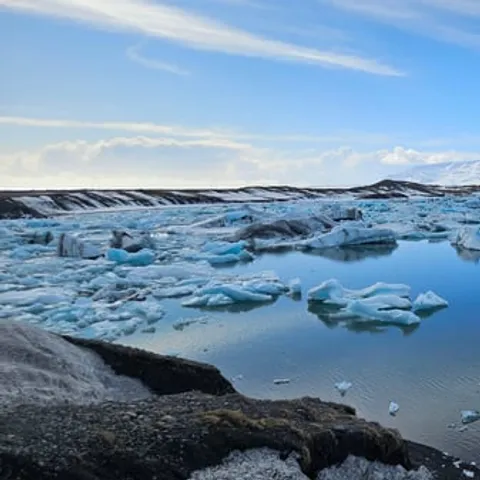
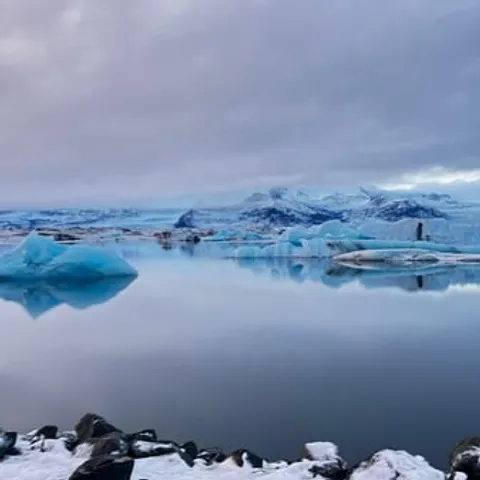
The lagoon sits 236 miles (380 kilometers) east of Reykjavik along Route 1 , a five-hour direct drive or seven to eight hours with South Coast sightseeing stops.
The season that suits most trips
Getting there and around
Midsummer: Nearly Endless Light and Peak Boat Season
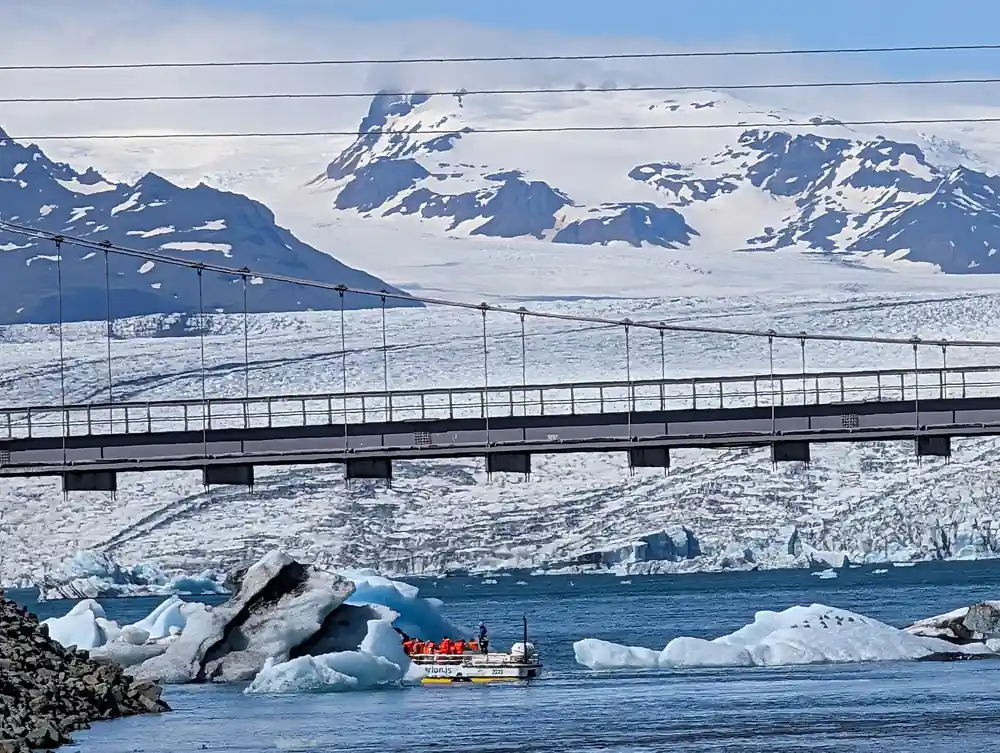
Midsummer at Jökulsárlón is the picture most people carry home: bright water, blue and white icebergs, and a horizon that refuses to go dark. Out here on the south coast the sun barely dips below the sky around the solstice, which makes a late arrival perfectly usable for photographs. It is also the busiest stretch of the year on the water. The amphibian boat tour season runs May-Nov, and each trip takes 30-40 minutes, which fits neatly into a stop between the lagoon and the beach across the road.[1]
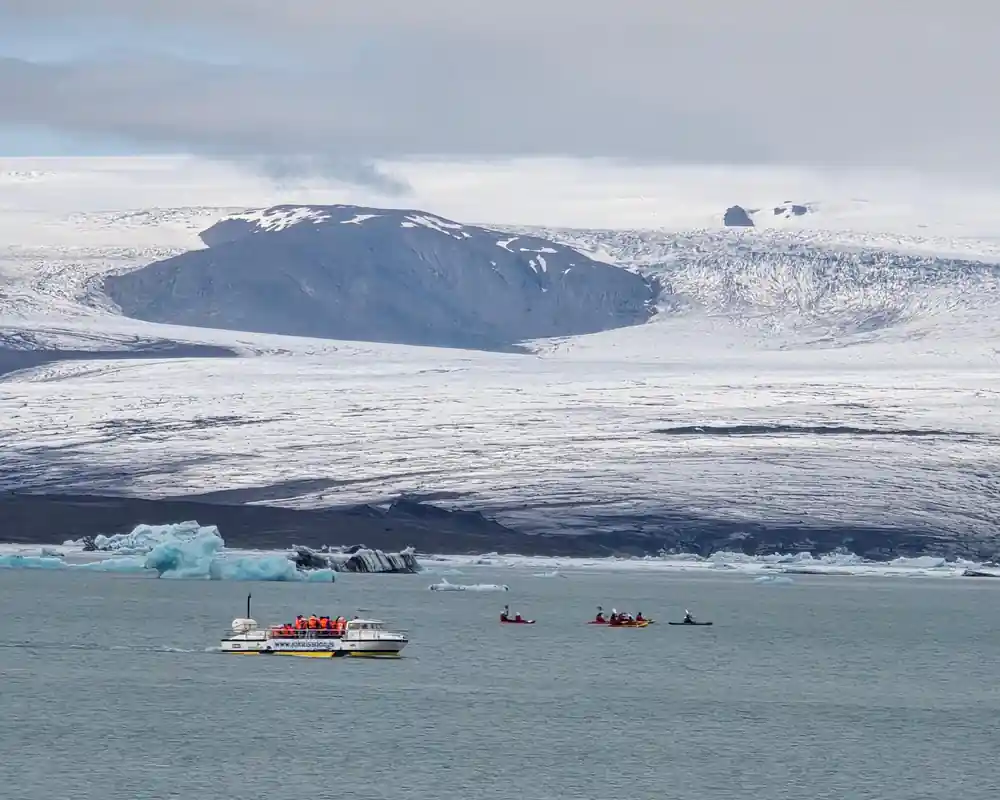
If you would rather be among the ice than beside it, the Zodiac Boat Tour is priced from 16,900 ISK, with the boat trip lasting 1 hour 15 minutes and a total duration of about 2 hours.[10] Kayaking is allowed on Jökulsárlón Glacier Lagoon during the summer season, and the guided kayak tour runs for 1.5 hours at water level.[2][3] A summer visit makes combining two of these easy, with daylight that lasts well into the evening.
One planning note for midsummer. Boat trips are popular through the summer and the middle of the day is busiest. On a coach day tour you will have a set window at the lagoon, and the walk to the beach takes a few minutes each way, so decide in advance whether you want the water or the sand. Trying to rush both is the one thing most people regret.
Spring and Autumn: Shifting Light and Quieter Roads
Spring and autumn are the seasons travellers tend to underestimate. The light is lower and softer than in midsummer, the roads are quieter, and the lagoon usually still holds plenty of ice. Weather swings more, though, and a south coast day can start calm and end in wind and rain. A shoulder season visit sits right on the edge of that shift, with a lagoon full of bergs, a beach scattered with ice and long empty stretches of the ring road. Add a waterproof layer to whatever you packed for summer.
Distance is worth planning around. Jökulsárlón is 236 miles (380 kilometers) east of Reykjavík along Route 1, a five-hour direct drive or seven to eight hours with South Coast sightseeing stops.[6] From Vík the lagoon is still 192 kilometers (118 miles) one way, and breaking the journey with a night on the coast is a common plan.[11] In the shoulder seasons an early start matters more than a long list of stops.
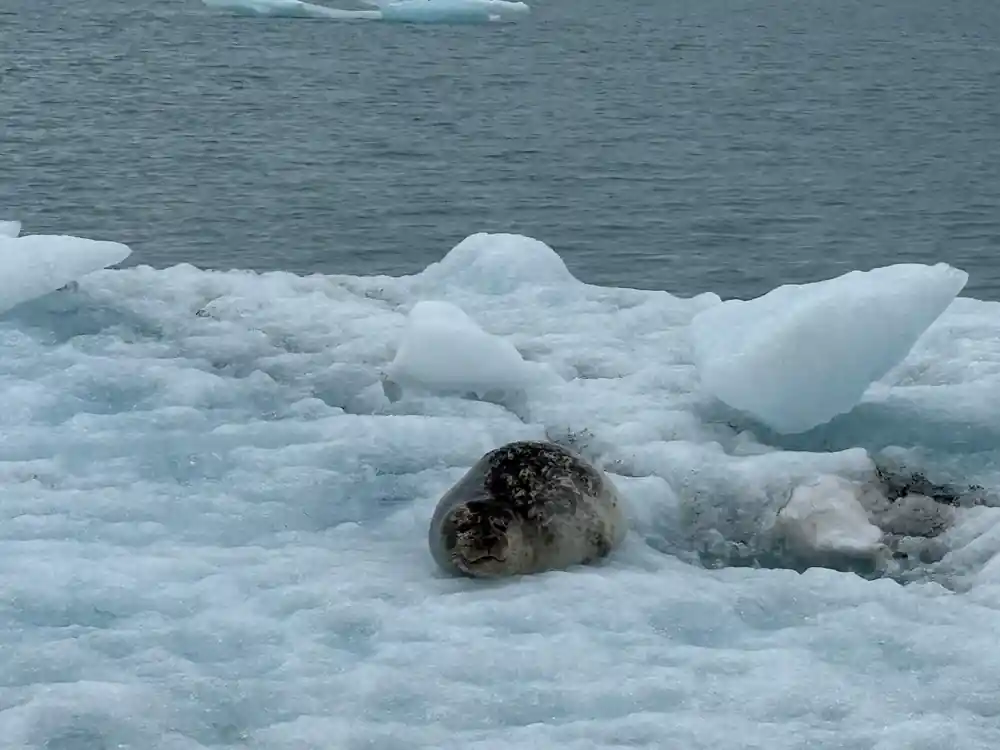
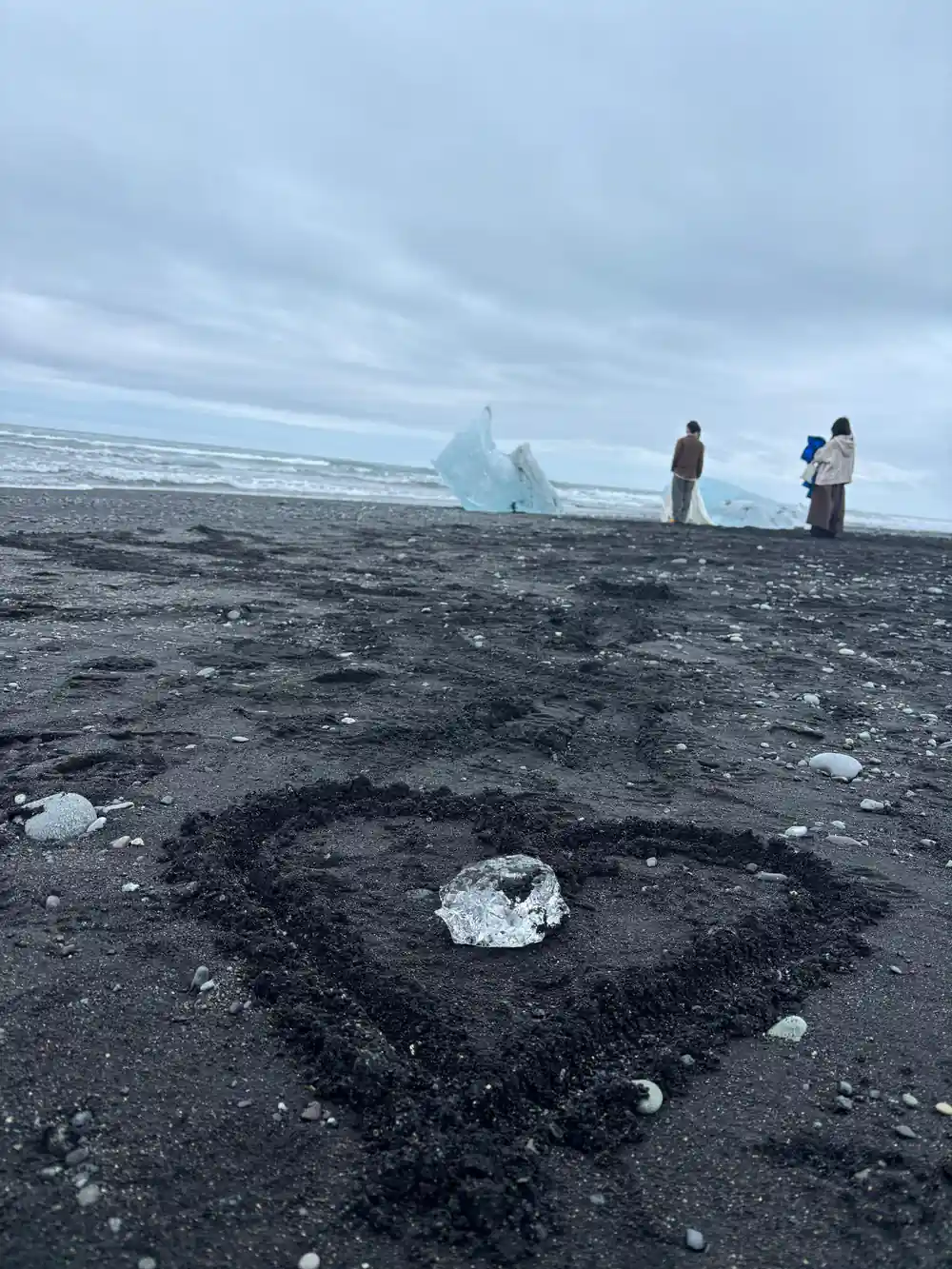
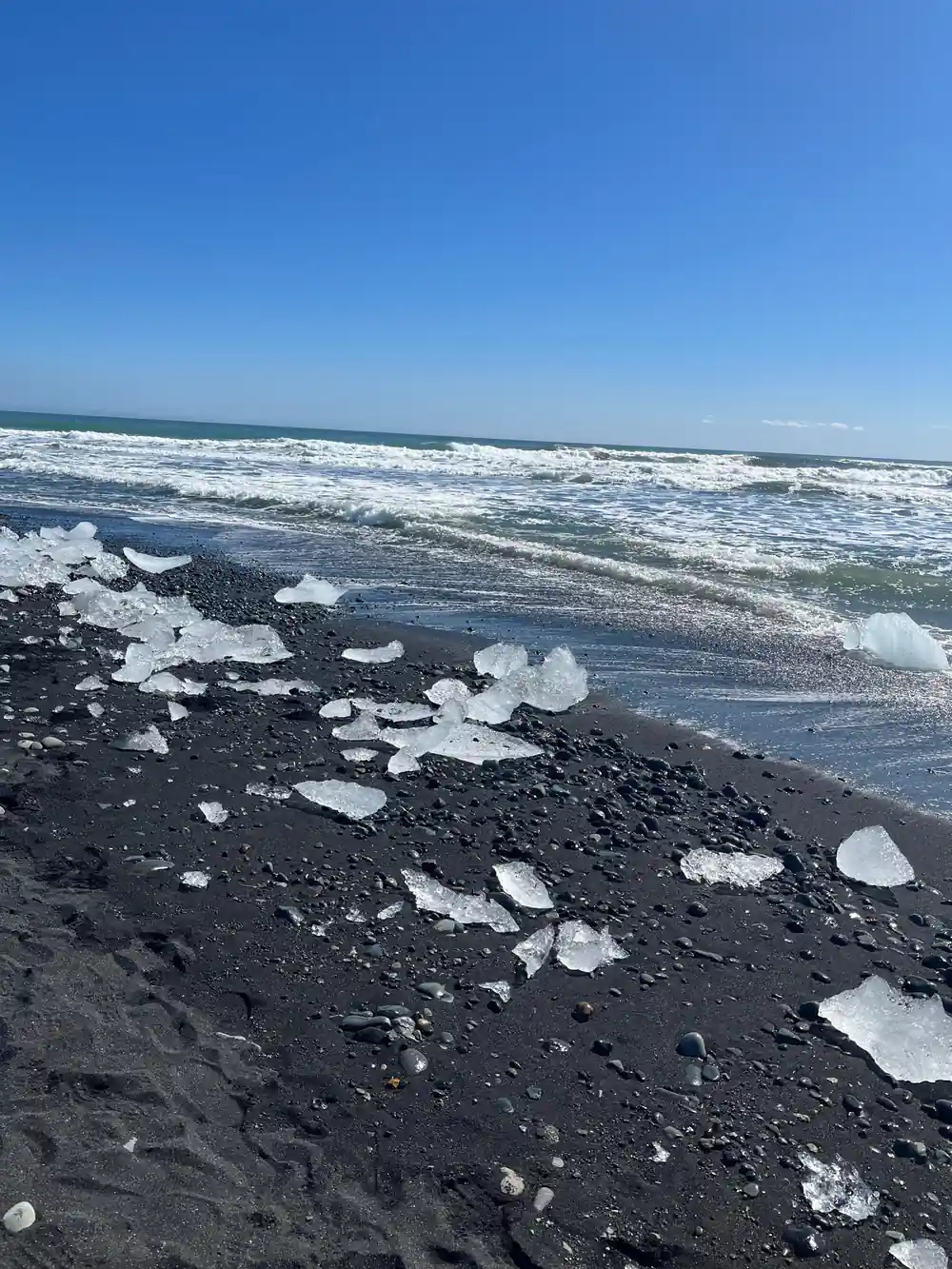
Icebergs drift out of the lagoon and onto the black sand at Diamond Beach.
Winter Departures and Storm Cancellations
Winter turns the same drive into a different trip. Daylight is short, the roads can close at short notice, and the coast is at its most dramatic. Coach day tours from Reykjavík still run, and the Reykjavik: Jokulsarlon Glacier Lagoon & Diamond Beach Tour covers 14 hours with a live guide in English.[5] The listed stops include Hvolsvöllur, Kirkjubæjarklaustur, Jökulsárlón, Vík and Seljalandsfoss.[5]
Free cancellation is a real comfort in winter. On this tour you can cancel up to 24 hours in advance for a full refund, and you can reserve now and pay later.[5] Vík in winter is often where the south coast decides what it is doing, and it is a sensible place to pause, read the forecast and choose whether to carry on east. If you are flying home the next day, keep that day clear.
Practical winter kit matters here. Windproof and waterproof outer layers, gloves, a hat and shoes with grip are the basics, and a spare pair of socks in your bag is never wasted. Keep a phone charged and a power bank handy, and if you are driving yourself, tell someone your rough plan before you leave.
Icebergs Through the Year and the Glacier Behind Them
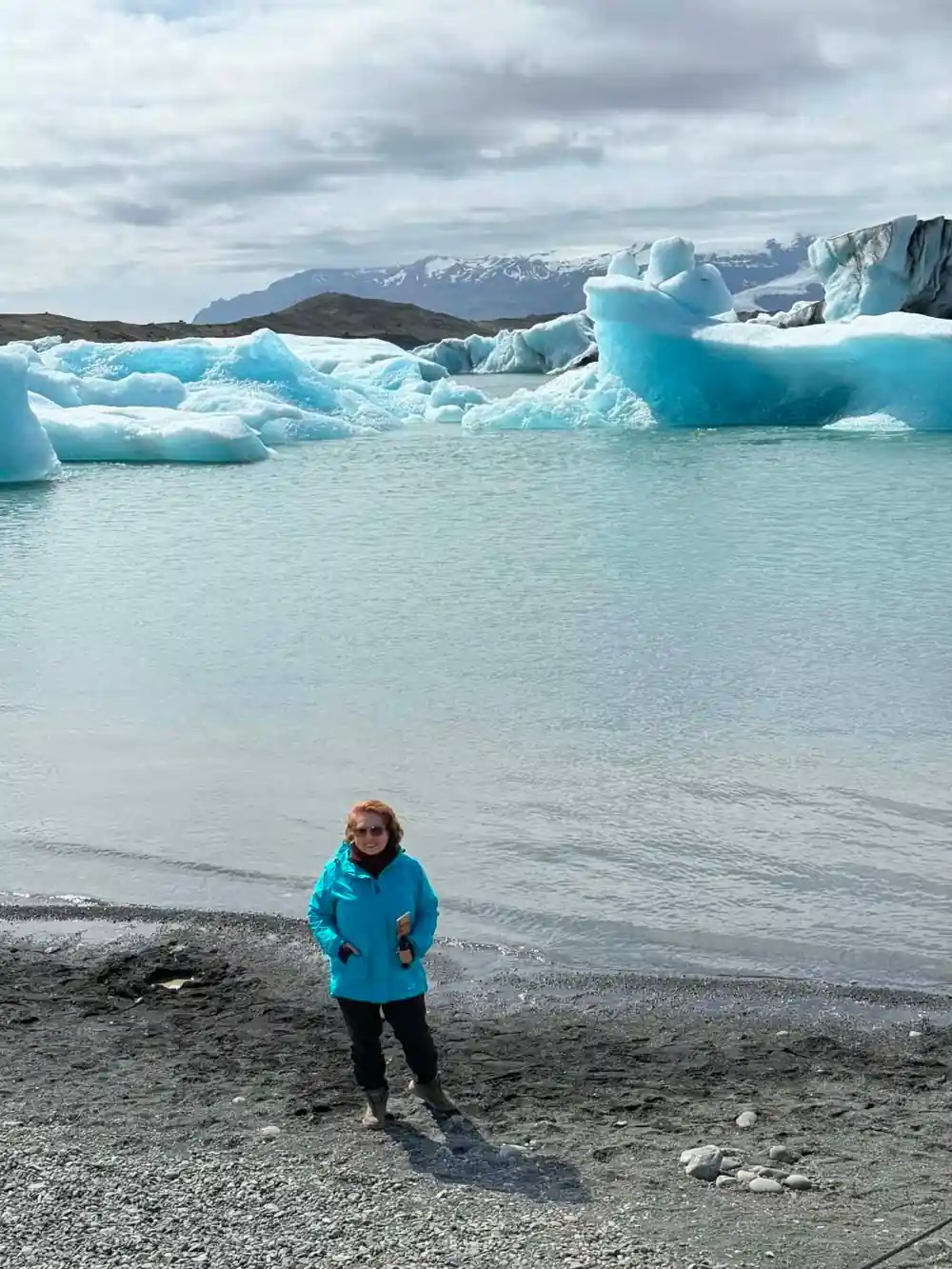
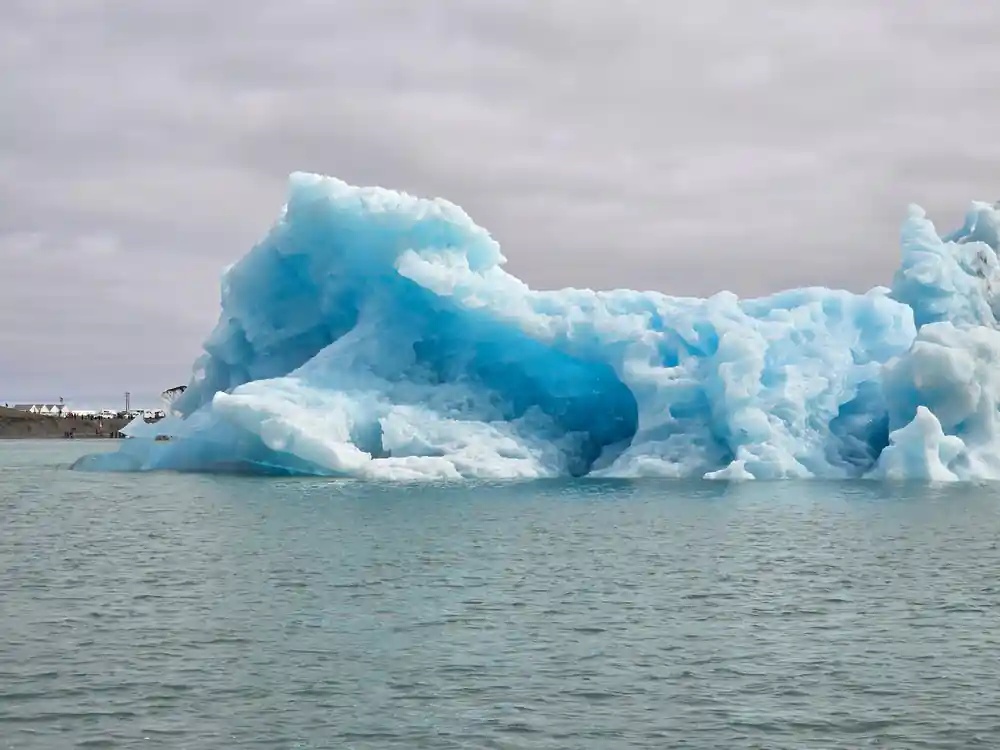
The ice on the water comes from Breiðamerkurjökull, the Vatnajökull outlet glacier that feeds Jökulsárlón glacier lagoon.[12] Calving happens through the year, and the lagoon holds bergs in every season, though their size and number shift with the weather. Jökulsárlón is 248 meters (814 feet) deep and is the deepest lake in Iceland.[13] Colour and light change by the hour, and the bergs drift slowly toward the short channel that leads to the sea.
Diamond Beach is the other half of the experience. It is a black volcanic sand beach in Southeast Iceland, scattered with clear glacial ice that breaks off Breiðamerkurjökull, drifts through the lagoon and washes ashore along the coast.[14] No two visits look the same. Ice melts, the tide rearranges it, and the low winter light picks out different shapes and edges.
from US$232
The Reykjavik: Jokulsarlon Glacier Lagoon & Diamond Beach Tour runs for 14 hours and is rated 4.67 from 3,935 reviews.[5]
Northern Lights Prospects and Dark Hours
The jokulsarlon northern lights are a winter proposition, and nobody can promise them. Aurora needs a dark sky and a clear one, and the long nights of midwinter give you the most chances to try, at the cost of short daylight for everything else. Staying near the lagoon or joining a dedicated hunt puts more nights on your side. Forecast apps and local guides are the two most useful tools.
If aurora is the point of the trip, the multi-day options are worth comparing. The From Reykjavík: 3-Day Northern Lights Hunt & Glacier Lagoon is priced from US$1111 and rated 4.83 from 6 reviews, with a live guide in English.[15] The From Reykjavík: 5-Day Northern Lights Hunt & Glacier Lagoon is priced from US$1628 and rated 5.00 from 9 reviews.[16] The 3-day route lists Jökulsárlón and Diamond Beach among its stops.[15]
A day tour and an aurora hunt are different shapes of trip. A coach day that leaves Reykjavík in the morning returns late in the evening, so a night on the coast is a separate plan. Staying a night or two near the lagoon gives you dark skies and a much better chance of catching a clear spell.
Ice Caves and Other Seasonal Activities
Ice caves belong to winter. In the Vatnajökull region they are only accessible during the winter months, from November and usually throughout March, depending on the weather.[4] Tours leave from the Jökulsárlón area: a 3-hour guided ice cave tour is priced from US$164, a 2.5-hour super jeep version from US$173, and a 3-hour small group blue ice cave tour from US$195.[17][18][19]
Summer swaps ice caves for water. Kayaking is allowed on the lagoon in the summer season, and an easy level guided glacier hike from the lagoon runs for 3 hours and is priced from US$132.[2][20] The amphibian boats run through the same months, and the Zodiac gives you a faster, longer run among the bergs.[1][10] Book the activity that matches your season rather than trying to bend the season to the activity.
Wildlife and Seal Sightings by Season
Seals are sighted on a regular basis at Jökulsárlón Glacier Lagoon on Iceland's south coast, and they are often visible from the shore.[9] A boat or a kayak gets you closer without crowding them. The calm, quiet hours early and late in the day are the best time to look, and a pair of binoculars earns its place in your bag.
Facilities at the lagoon are simple but useful: there are public toilets and a café at Jökulsárlón.[21] If you would rather not drive back the same day, Hotel Jokulsarlon is an accommodation option near the lagoon.[22] Film fans may recognise the water, as Jökulsárlón was used as a filming location for A View To A Kill, Die Another Day and Lara Croft: Tomb Raider.[23]
Day tour lengths from Reykjavík
Compare day tour from-prices
US dollar from-prices as listed:[5][7][20][24][25]
Season windows at a glance
Plan your Jökulsárlón day
Pick your season
Summer brings the boat season and long light, winter brings ice caves and dark skies, and spring and autumn bring quieter roads.
Book the long day tour
A Reykjavík day tour covers the drive, the lagoon and the beach in one go, and free cancellation keeps your options open.
Add one activity
An amphibian boat, a Zodiac ride or a kayak puts you among the ice; in winter, swap that for an ice cave or a glacier walk.
Pack for the coast
Wind and rain arrive fast on the south coast. Bring layers, a waterproof shell, sturdy shoes and a dry bag for electronics.
Sort out your pickup
Check availability for pickup options when you book, and confirm the meeting point on the day before you travel.
See the lagoon and Diamond Beach in one long day
from US$233Reserve now & pay later