The main points
- Vatnajökull spills downhill in outlet glaciers, and Breiðamerkurjökull is the one that feeds Jökulsárlón glacier lagoon.[1]
- The lagoon is 248 meters (814 feet) deep and is the deepest lake in Iceland.[2]
- Jökulsárlón is 236 miles (380 kilometers) east of Reykjavík along Route 1, a five-hour direct drive or seven to eight hours with stops.[3]
- The Reykjavik: Jokulsarlon Glacier Lagoon & Diamond Beach Tour runs 14 hours, with pickup options and free cancellation up to 24 hours in advance.[4]
- Ice caves in the Vatnajökull region are only accessible during the winter months, from November and usually throughout March, depending on the weather.[5]
- Top choice Jokulsarlon & Diamond Beach from US$232 Duration14 hours[4]Rating4.67 from 3,935 reviews[4]GuideLive tour guide in English[4]PickupCheck availability for pickup options[4]CancellationCancel up to 24 hours in advance[4] Check availability
- South Coast & Jokulsarlon from US$231 Duration14.5 hours[6]Rating4.54 from 1,494 reviews[6]GuideLive tour guide in English[6]PickupCheck availability for pickup options[6]CancellationCancel up to 24 hours in advance[6] See this tour
- Lagoon Boat Ride Day Tour from US$288 Duration14 hours[7]Rating4.61 from 268 reviews[7]GuideLive tour guide in English[7]PickupCheck availability for pickup options[7]CancellationCancel up to 24 hours in advance[7] See this tour
Yes. Public toilets, a café, souvenir shop, parking area, and accessible parking spaces are available.
Is the Vatnajökull glacier day worth it?
Pre-booking checklist
Vatnajökull: The Ice Cap That Feeds the Lagoon
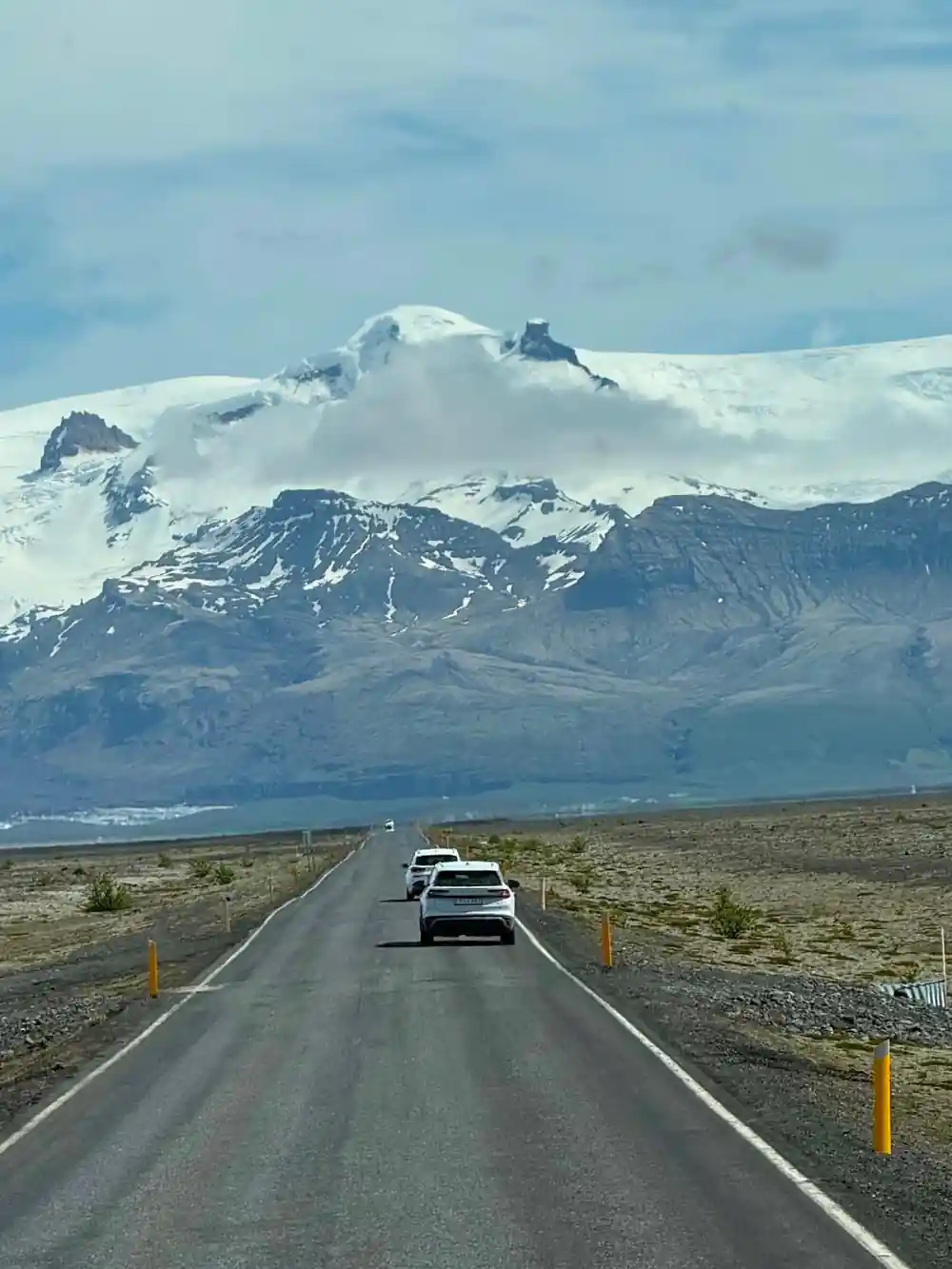
Vatnajökull is the great ice cap of south-east Iceland, a high plain of ice that spills downhill towards the coast in long tongues. One of those tongues is Breiðamerkurjökull, the outlet glacier that feeds Jökulsárlón glacier lagoon.[1] Nothing here makes complete sense without the ice above it. The lagoon is meltwater, the icebergs are pieces that have broken off the glacier front, and the black sand beach along the coast is where those pieces finally come to rest. From the shore you are watching one system at work: ice, water, sea.
The drive from the capital is a long one, and it shapes how people plan this trip. Jökulsárlón is 236 miles (380 kilometers) east of Reykjavík along Route 1, a five-hour direct drive or seven to eight hours with South Coast sightseeing stops.[3] Most travellers break the journey with waterfalls and a meal, and the road becomes part of the day rather than a chore between two highlights. If you are already east of Vík, the ice is far closer: the one-way distance from Vík to Jökulsárlón Glacier Lagoon is 192 kilometers (118 miles).[12]
Most people visit the lagoon as part of a long day from Reykjavík, which is a practical way to cover the distance without doing the driving yourself. The Reykjavik: Jokulsarlon Glacier Lagoon & Diamond Beach Tour runs 14 hours, and free cancellation is available up to 24 hours in advance.[4]
Breiðamerkurjökull: Where Ice Becomes Water
An outlet glacier works like a slow river. Snow collects high on the ice cap, packs down into ice, and the ice creeps downhill until it reaches flatter ground, where it spreads out, cracks, and drops pieces into the water. Breiðamerkurjökull is the Vatnajökull outlet glacier that feeds Jökulsárlón glacier lagoon,[1] and the glacier near Jökulsárlón is not a distant white smudge on a map. It is the wall of ice at the back of the water, the source of every berg you see drifting past.
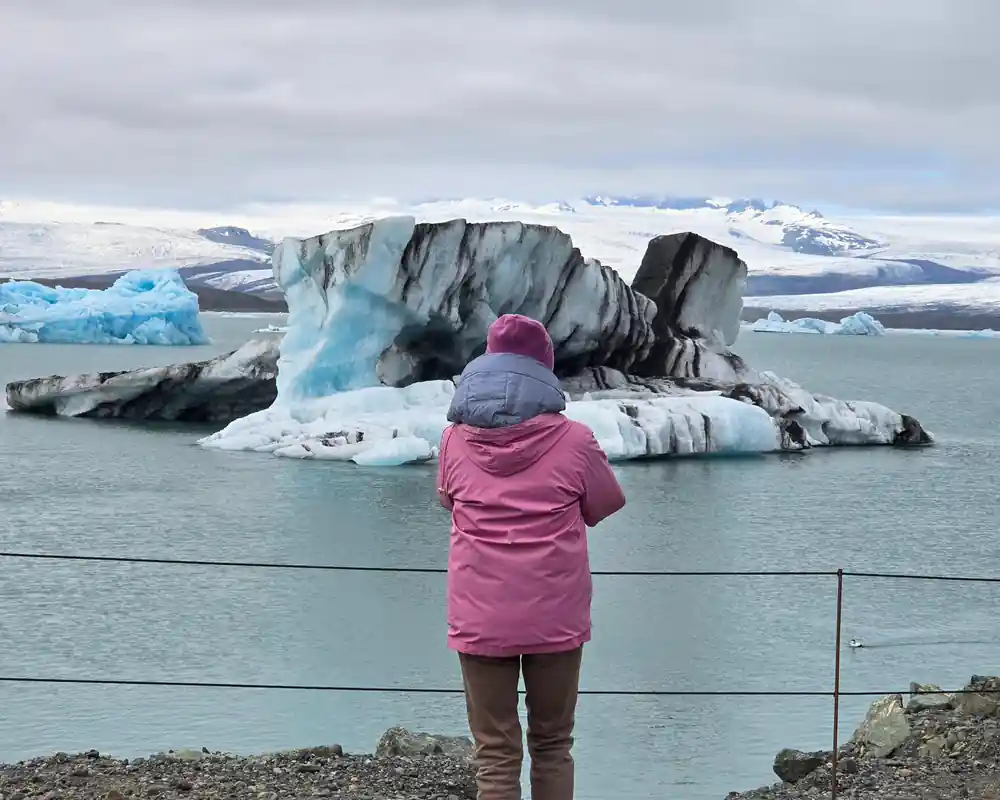
The water it feeds is deep. Jökulsárlón is 248 meters (814 feet) deep and is the deepest lake in Iceland.[2] Ice that leaves the lagoon washes up along the coast at Diamond Beach, a black volcanic sand beach in south-east Iceland scattered with clear glacial ice.[13] Seals are sighted on a regular basis at Jökulsárlón,[11] and a dark head surfacing between the bergs is one of the quiet pleasures of a stop here. Give yourself time on the shore as well as on the water.
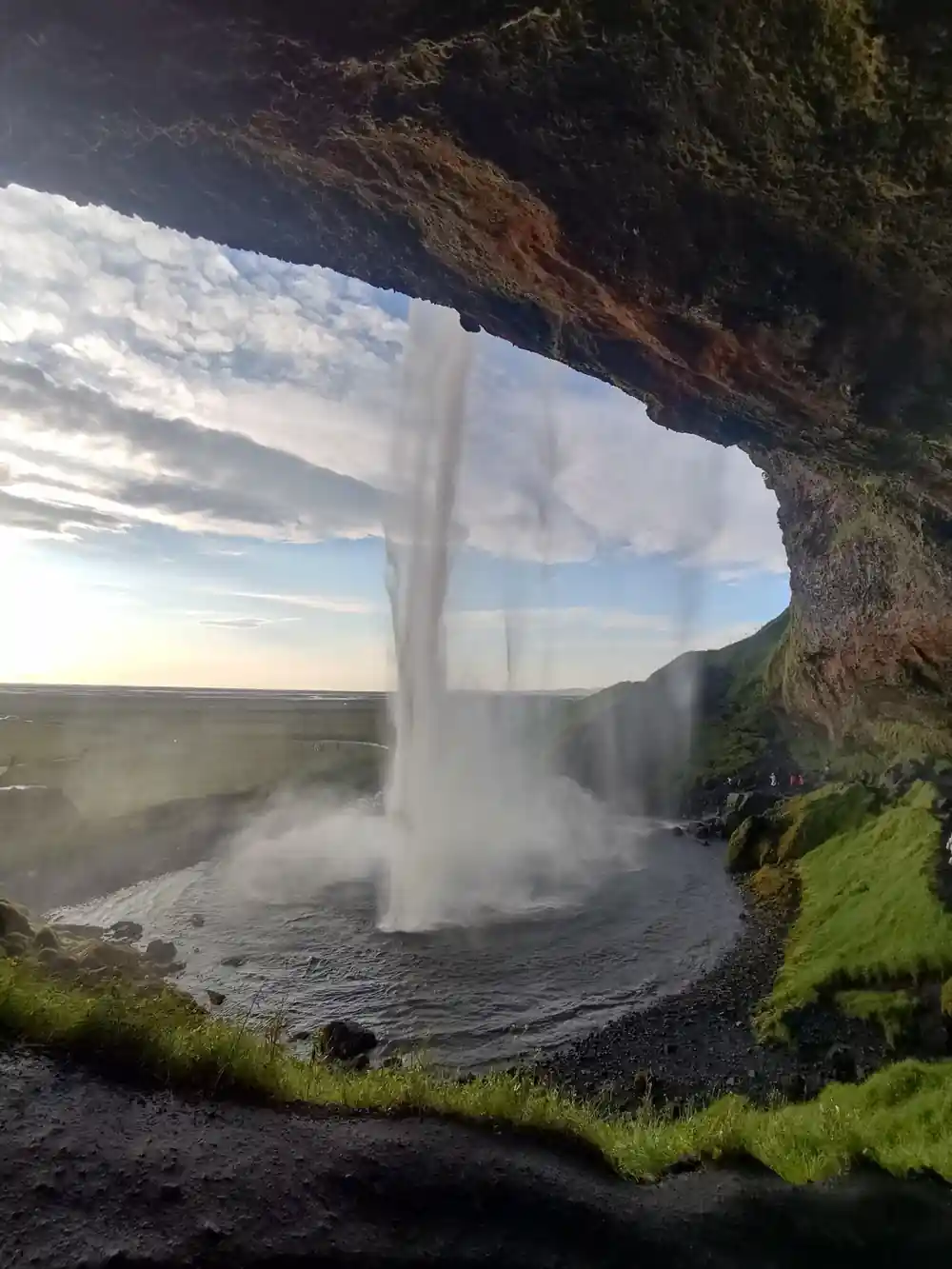
Icebergs drifting out of the lagoon towards the open sea
The Blue of Compressed Ice
Glacier ice is not the same as the ice in a freezer tray. Snow falls, piles up, and is pressed by the weight above it until much of the air is squeezed out. Ice with fewer bubbles behaves differently with light, and that is what gives compressed ice its blue look. A simple way to hold the glacier vs iceberg difference in your head: the glacier is the mass of ice on the mountain, and an iceberg is a piece that has broken off and is now floating. Same material, different stage.
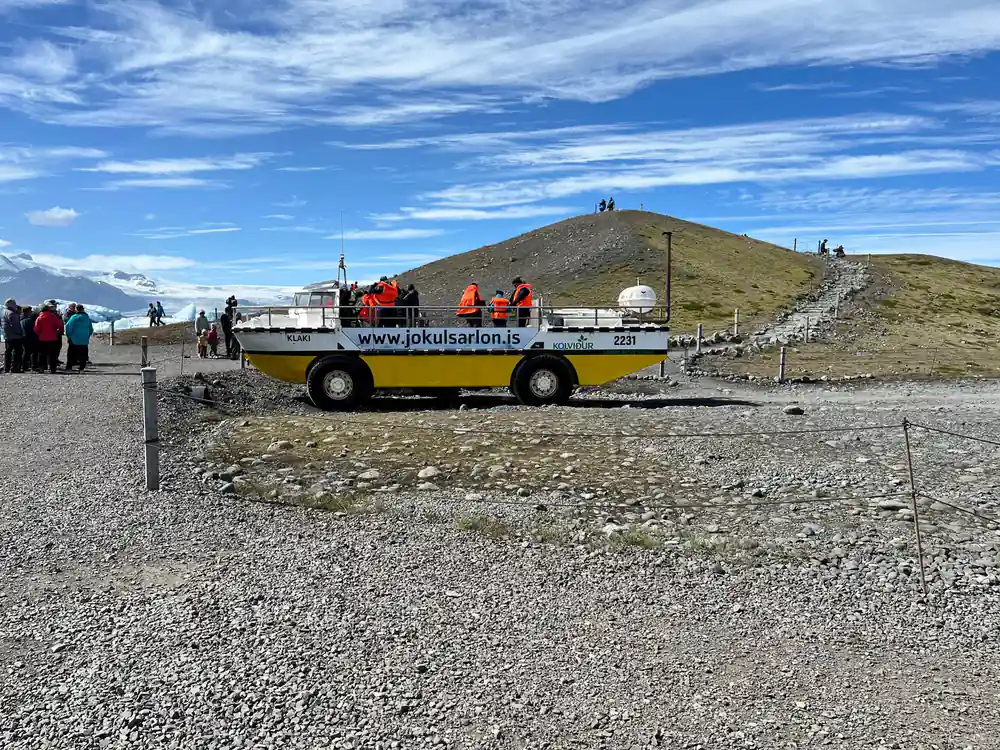
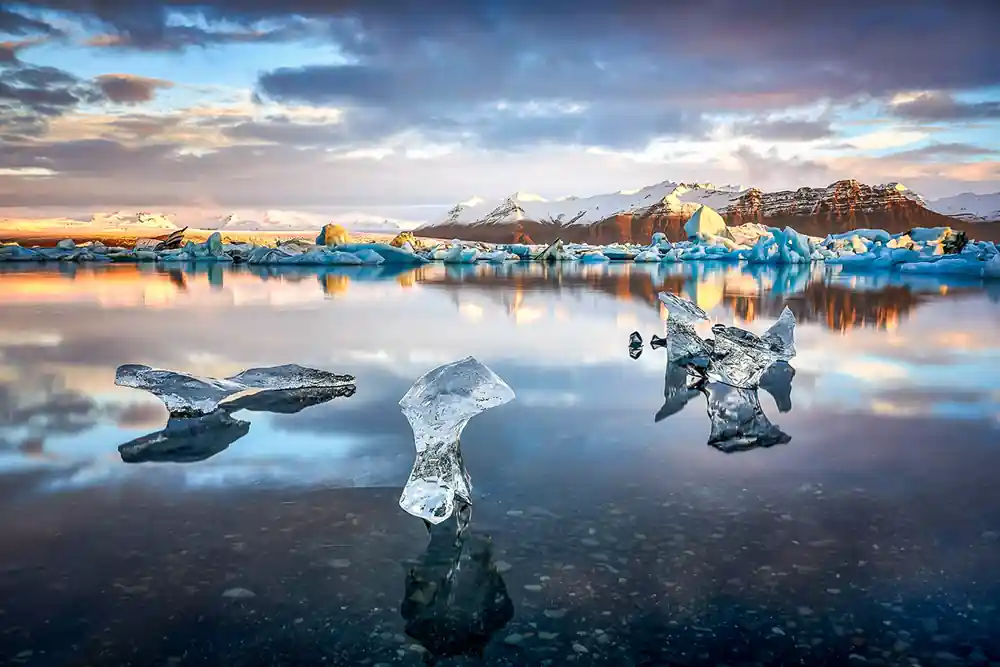
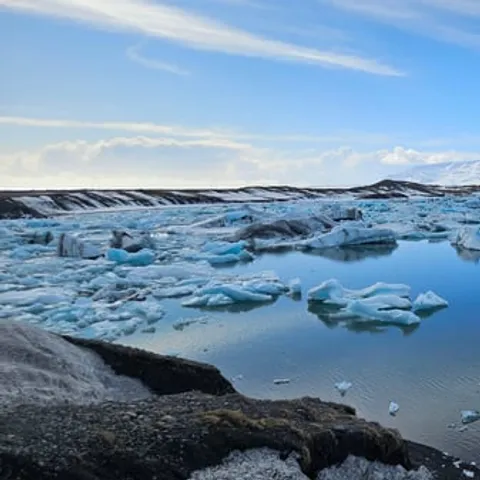
Bergs in the lagoon come in every shade from white to deep blue, and they change shape as they melt and turn over. On a still day the water holds a near perfect reflection of ice and sky, and photographers wait for the light to soften. A boat puts you among the ice rather than at the edge of it, and the amphibian boat tour season runs May-Nov, with the trip taking 30-40 minutes.[8] Take a waterproof layer and something dry for your phone.
Black Stripes and Buried Volcanoes
Look closely at the ice and you will see that it is not uniformly clean. Many bergs carry dark bands, thin layers of grit and ash trapped in the ice as it formed, and those stripes stay visible long after a piece has broken free. In clear light the layered blue and black stands out sharply. The lagoon has another life on screen as well: Jökulsárlón glacier lagoon was used as a filming location for A View To A Kill, Die Another Day, and Lara Croft: Tomb Raider.[14]
The black sand beneath the ice is volcanic, and the contrast of dark sand and clear ice is the picture most people carry home. Ice washes in and out with the tide, so the beach looks different from one hour to the next: bare one moment, strewn with glassy fragments the next. If you would rather have the ice to yourself, aim for early morning or late evening, when the light is low and the coach park is quiet.
from US$232
The Reykjavik: Jokulsarlon Glacier Lagoon & Diamond Beach Tour runs 14 hours, with free cancellation up to 24 hours in advance.[4]
Jökulhlaup: When the Glacier Floods
A jökulhlaup is a glacial flood, a sudden release of water that has gathered under or inside a glacier. Icelanders have lived with these floods for centuries, and they are treated with real respect along the south coast. They arrive with little warning and move water, ice and debris with a force that ordinary meltwater does not have.
You are unlikely to see one on a short trip, and you would not want to be near one if you did. What you see instead is the aftermath: grey meltwater plumes spreading through the lagoon, bergs jostling against each other, and a shoreline that can change from one week to the next. Roads and bridges along this coast are built with that in mind, and closures happen when conditions turn. If you are self driving, check the road and weather pages before you set off.
A Glacier in Retreat
Glaciers move, and the front of Breiðamerkurjökull is not where it used to be. As the ice edge has drawn back from the coast, meltwater has filled the low ground behind it and the lagoon has grown into the shape you see today. Breiðamerkurjökull remains the outlet of Vatnajökull that feeds Jökulsárlón glacier lagoon,[1] but the balance between ice and open water shifts year by year. Standing here, you are watching a landscape that is still being made.
Ask about Jokulsarlon glacier size and most people mean the water rather than the ice. The lagoon is 248 meters (814 feet) deep, the deepest lake in Iceland,[2] and it looks far shallower than that from the shore. Facilities make a stop easy: public toilets and a café are available at Jökulsárlón,[10] and Hotel Jokulsarlon is an accommodation option near the lagoon[15] if you would rather not drive the whole way back in one evening.
Winter Ice Caves Under the Ice Cap
Winter changes what is possible here. Ice caves in the Vatnajökull region are only accessible during the winter months, from November and usually throughout March, depending on the weather.[5] They form where meltwater and streams cut tunnels through the ice, and the ceilings glow with the same compressed blue you see in the lagoon. They are not places to wander into on your own; go with a guide who knows the current conditions and the route in.
Summer has its own ways onto the water. Kayaking is allowed on Jökulsárlón Glacier Lagoon during the summer season,[16] and the Zodiac boat tour lasts 1 hour 15 minutes, with a total duration of about 2 hours, priced from 16,900 ISK.[9] Whichever you choose, the day from Reykjavík is long, so leave some slack in your plans. Staying overnight nearby, or joining a tour that handles the driving, leaves you free to enjoy the ice instead of watching the clock.
How long the Reykjavik day tours run
Durations as listed for four Reykjavik day tours.[4][6][7][17]
What a glacier lagoon day costs in US dollars
From-prices are per person as listed; no separate child rate is given.[4][6][7][18]
When each experience runs
How to plan a glacier day
Book the tour
Check the pickup options when you book, and match the departure time to how you sleep.
Choose a boat
The amphibian boat season runs May-Nov, with trips of 30-40 minutes.[8]
Dress for wind
Waterproof outer layers, gloves and a hat. The wind off the ice is the part people underestimate.
Plan the long drive
From Reykjavík it is a five-hour direct drive, or seven to eight hours with South Coast stops.[3]
Consider a night nearby
Hotel Jokulsarlon is an accommodation option near the lagoon.[15]
See the lagoon, the icebergs and Diamond Beach in one day
from US$233Reserve now & pay later