The main points
- The lagoon has appeared in three films: A View To A Kill, Die Another Day and Lara Croft: Tomb Raider.[1]
- Jökulsárlón sits 236 miles (380 kilometers) east of Reykjavík along Route 1, a five-hour direct drive or seven to eight hours with South Coast stops.[2]
- The water is 248 meters (814 feet) deep, the deepest lake in Iceland, and the ice comes from the Breiðamerkurjökull outlet glacier.[3][4]
- Diamond Beach is black volcanic sand in Southeast Iceland, scattered with clear glacial ice that drifts through the lagoon and washes ashore.[5]
- The Reykjavik day tour to the lagoon and Diamond Beach runs 14 hours from US$232, rated 4.67 from 3,935 reviews, with free cancellation.[6]
- Top choice Lagoon & Diamond Beach from US$232 Duration14 hours[6]Rated4.67 from 3,935 reviews[6]Live guideEnglishPickupCheck availability for pickup optionsCancellationCancel up to 24 hours in advance[6] Check availability
- South Coast & Diamond from US$231 Duration14.5 hours[7]Rated4.54 from 1,494 reviews[7]Live guideEnglishPickupCheck availability for pickup optionsCancellationCancel up to 24 hours in advance[7] See this tour
- Lagoon and boat tour from US$232 Duration14 - 15 hours[8]Rated4.55 from 1,424 reviews[8]Live guideEnglishPickupCheck availability for pickup optionsCancellationCancel up to 24 hours in advance[8] See this tour
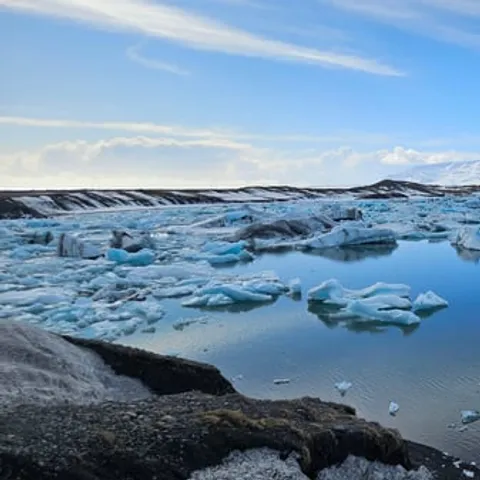
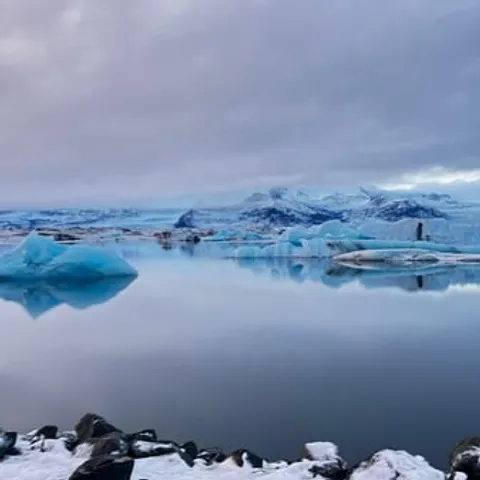
Jokulsarlon Glacier Lagoon : A View To A Kill, Die Another Day, Lara Croft: Tomb Raider
Films, ice and a long day on the road
On the day
- Expect an early Reykjavik start and a late return, so keep the evening clear
- Long coach legs along the south coast with a live guide on board
- Waterproof shell, warm mid layer, hat and gloves, whatever the forecast says
- Pickup options in Reykjavik: check availability when you book
At the lagoon
- Walk the lagoon shore first, then cross to the ice on the black sand
- Low, slanted light makes the ice change colour through the day
- Stay back from the surf and never climb on ice that has washed ashore
- Amphibian boat tours run May-Nov and last 30-40 minutes[9]
A View Fit for the Silver Screen
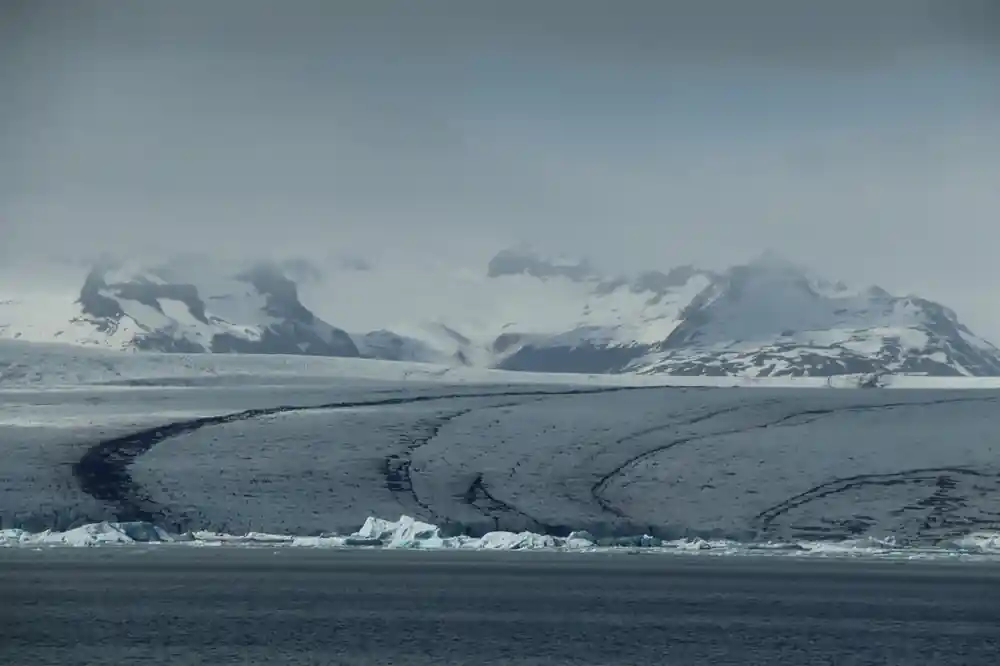
Jökulsárlón does not look like a lake so much as a slow procession of ice. Blocks break away from Breiðamerkurjökull, the Vatnajökull outlet glacier that feeds the lagoon, and drift through the water toward the sea.[4] Beneath them the lagoon is 248 meters (814 feet) deep, the deepest lake in Iceland.[3] On a still morning the icebergs sit mirrored on the surface, white and pale blue against grey water. When the wind gets up they knock together, and the whole lagoon sounds like a workshop full of glass. Snow, rain and sun can all arrive in the same hour, and none of them lasts.
The lagoon has appeared in three films: A View To A Kill, Die Another Day and Lara Croft: Tomb Raider.[1] What a camera catches here is what you get on the day, with little between the viewer and the water. You stand on gravel or black sand, icebergs drift past a few metres out, and the scale does the rest. That is also what keeps the planning simple. The lagoon sits 236 miles (380 kilometers) east of Reykjavik along Route 1, a five-hour direct drive or seven to eight hours with South Coast sightseeing stops, and a guided day tour hands the driving to someone else.[2]
The Lagoon's Debut in Bond Films
Two of the three titles credited to the lagoon are Bond films, A View To A Kill and Die Another Day.[1] Flat pans of white, sheer faces of blue and water still enough to double every block: the lagoon suits a wide shot. From the shore you can walk a short stretch of the lagoon and watch the ice move at its own pace. Nothing out there happens quickly, and standing still to do nothing but look is the point of the visit.
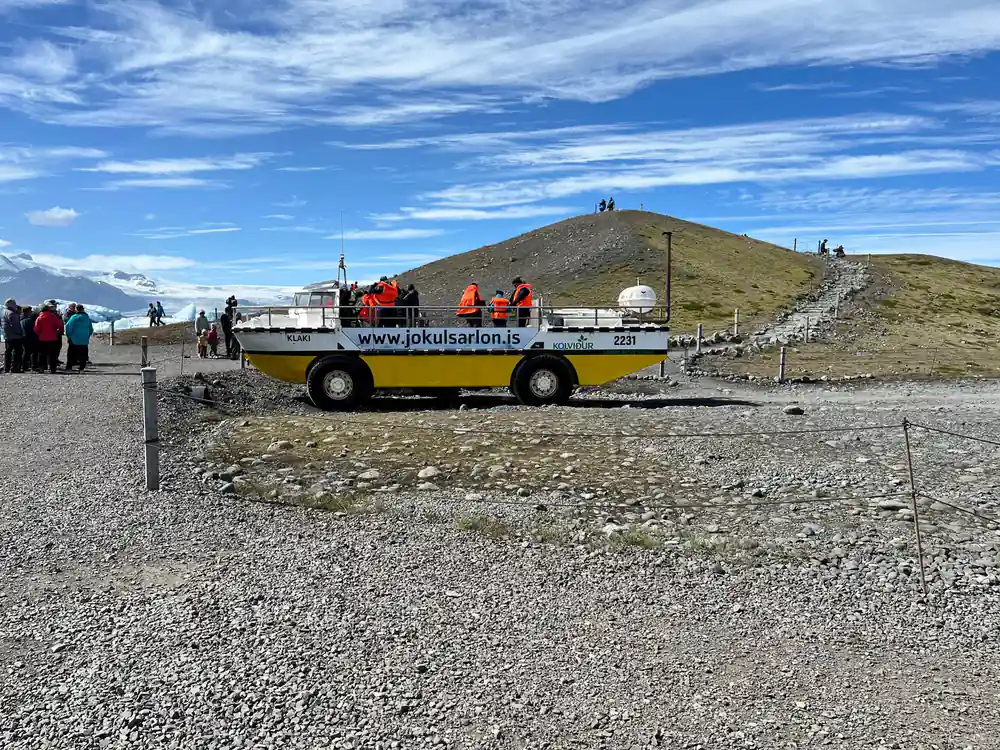
To see the ice from the water rather than from the shore, boats run on the lagoon. The amphibian boat tour season runs May-Nov and the trip takes 30-40 minutes.[9] The Zodiac boat tour is priced from 16,900 ISK, and the boat tour lasts 1 hour 15 minutes, with a total duration of about 2 hours.[10] Seals are sighted on a regular basis at Jokulsarlon Glacier Lagoon, sometimes at a distance from the shore and closer from out on the water.[11] On land the facilities are modest but useful: public toilets and a cafe are available.[12]
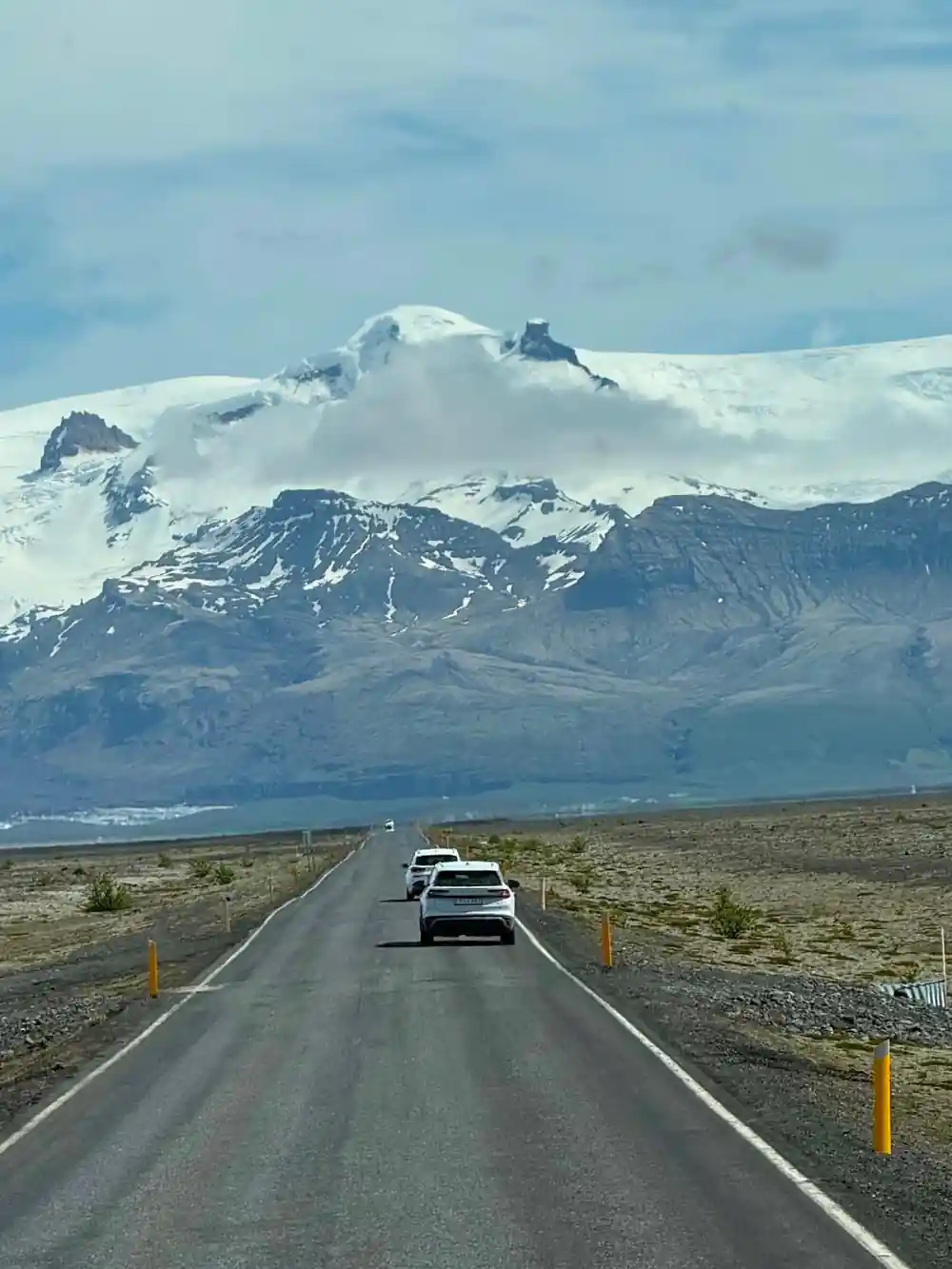
Ice drifting through the lagoon toward the Atlantic on Iceland's south coast.
Filming a Surface That Never Sits Still
Ice is a difficult subject to work with. It reflects, it changes colour with the cloud, and it refuses to hold still. At Jokulsarlon the pieces arrive from Breiðamerkurjökull, the Vatnajokull outlet glacier that feeds the lagoon.[4] The scene you photograph on Tuesday is not the scene your friend photographs on Friday. Colours shift from bright white to milky grey to a dense, deep blue, depending on how the light strikes a face that has been pressed under its own weight for a very long time.
Winter adds another dimension to the area. Ice caves in the Vatnajokull region are only accessible during the winter months, from November and usually throughout March, depending on the weather.[13] In summer, kayaking is allowed on Jokulsarlon Glacier Lagoon.[14] Whichever season you choose, the lagoon sits 236 miles (380 kilometers) east of Reykjavik along Route 1, a five-hour direct drive or seven to eight hours with South Coast sightseeing stops.[2] That is a long way to arrange on your own, and a guided day tour from Reykjavik takes the driving, the fuel stops and the timings off your hands.
Beyond Bond: Other Films Shot Here
The third name on the lagoon's film list is Lara Croft: Tomb Raider.[1] It sits alongside the two Bond titles, and between them they cover much of what a film crew wants from a location: water, ice, wide horizons and weather that does half the work for them. There is no studio lot to tour and no marked film trail. The location itself is the exhibit, and access is simply a matter of getting yourself to the south coast.
The approach is part of the experience. From Vik, the drive to Jokulsarlon Glacier Lagoon is 192 kilometers (118 miles) one way along the Ring Road.[15] By the time the water appears you have usually passed hours of waterfalls, moss and black sand, and the lagoon arrives all at once beside the road. Facilities are simple and welcome: public toilets and a cafe are available at the lagoon.[12] After a long drive east, that cafe matters more than any film credit.
248m=814ft
Jokulsarlon is the deepest lake in Iceland, and the ice drifting across it comes from the Breiðamerkurjökull outlet glacier.[3][4]
Ice and Light: What the Camera Picks Up
Light in Iceland is often low, slanted and softened by cloud, and that flatters white and blue surfaces. Those are the colours on offer at Jokulsarlon: the bright, aerated white of ice that has just broken away, the milky grey of a block rolled in the surf, and the deep blue of ice that has been squeezed under its own weight for a very long time. Black volcanic sand at Diamond Beach sets all of it off, and the contrast comes free with the landscape.
For a visitor, that means slow viewing pays off. Walk the shore, then look again a little later: the same iceberg will have turned, the light will have moved, and the reflection will have changed shape. Photographers tend to work close to the waterline with a wide lens for the foreground ice and something longer for the blocks further out. Keep an eye on the surf. The waves that polish the ice also move it, and the pieces on the sand are heavier than they look. Waterproof shoes and a cloth for the lens are worth carrying.
The Ring Road Bridge and the Water Beneath
The main road crosses the lagoon at its narrow mouth, and the ice and the road end up in the same photograph. Look one way for the water stretching back toward the glacier, the other way for the sea beyond the bridge. Ice that clears the mouth either grounds on the sand at Diamond Beach or is pulled back out with the tide, and the beach is rearranged hour by hour as a result. It is worth crossing the road to see both sides rather than staying on the side where the coach stopped.
The distances are worth knowing before you decide how to travel. Jokulsarlon is 236 miles (380 kilometers) east of Reykjavik along Route 1, a five-hour direct drive or seven to eight hours with South Coast sightseeing stops.[2] Vik to the lagoon is 192 kilometers (118 miles) one way.[15] A Reykjavik day tour covers the ground in 14 hours from US$232, rated 4.67 from 3,935 reviews, with pickup available and free cancellation up to 24 hours in advance.[6] Someone else drives, and you watch the south coast unfold through the window.
Diamond Beach: Ice on Black Sand
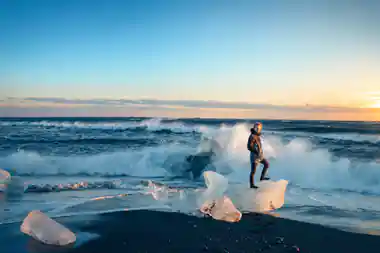
Diamond Beach is a black volcanic sand beach in Southeast Iceland scattered with clear glacial ice that breaks off from Breiðamerkurjökull, drifts through Jokulsarlon Glacier Lagoon and washes ashore along the coast.[5] Chunks of ice on dark sand, catching whatever light there is: that is the picture people come for. Some pieces are the size of a fist, others the size of a suitcase, and none of them stay long.
The lagoon and the beach sit close together, separated by the road, so it is easy to see both in one stop. Wear shoes with grip, keep back from the surf, and never climb on ice that has washed in. The Reykjavik tour named for the lagoon and Diamond Beach runs 14 hours.[6] Carry a spare battery for your phone or camera, because cold air drains power faster than most people expect, and the best light often arrives just before you leave.
Day tour prices from Reykjavik to Jokulsarlon
From-prices in US dollars for day tours to Jokulsarlon:[6][7][8][16][17]
What the main options cost on the day
From-prices in US dollars for these tours:[6][17][18][19]
When the ice looks different
How to plan the day
Pick your base
Reykjavik day tours run east along the south coast with pickup and a live guide on board, so you start from the city rather than the lagoon.
Choose a season
Summer brings boats on the lagoon and very long evenings; winter brings ice caves in the Vatnajokull region and a different kind of light.
Pack for wind
Waterproof shell, warm layer, hat, gloves and grippy shoes. The shore is gravel and wet sand, and it is exposed.
Plan your stops
Waterfalls and Vik come before the lagoon, so keep camera power for the second half of the drive.
Book with flexibility
The day tour can be reserved now and paid later, with free cancellation up to 24 hours in advance.[6]
Walk the shore where the Bond films were shot
from US$233Reserve now & pay later