The main points
- The Reykjavik: Jokulsarlon Glacier Lagoon & Diamond Beach Tour runs 14 hours, from US$232, with pickup options and free cancellation up to 24 hours in advance.[1]
- You get one window at the lagoon on a fixed schedule, so plan the shots you want before you arrive and then work one spot properly instead of sprinting between viewpoints.
- The amphibian boat tour season runs May-Nov and the trip takes 30-40 minutes. The Zodiac Boat Tour lasts 1 hour 15 minutes, about 2 hours in total.[2][3]
- Seals are sighted on a regular basis at Jökulsárlón, at a distance from the shore or nearer from the water. The lagoon is 248 meters (814 feet) deep.[4][5]
- Jökulsárlón is 236 miles (380 kilometers) east of Reykjavík, a five-hour direct drive or seven to eight hours with South Coast sightseeing stops.[6]
- Top choice Lagoon & Diamond Beach from US$232 Duration14 hours[1]Rating4.67 from 3,935 reviews[1]GuideLive tour guide: English[1]CancellationCancel up to 24 hours in advance[1] Check availability
- South Coast & Diamond from US$231 Duration14.5 hours[7]Rating4.54 from 1,494 reviews[7]GuideLive tour guide: English[7]CancellationCancel up to 24 hours in advance[7] See this tour
- Boat Ride & Diamond Beach from US$288 Duration14 hours[8]Rating4.61 from 268 reviews[8]GuideLive tour guide: English[8]CancellationCancel up to 24 hours in advance[8] See this tour
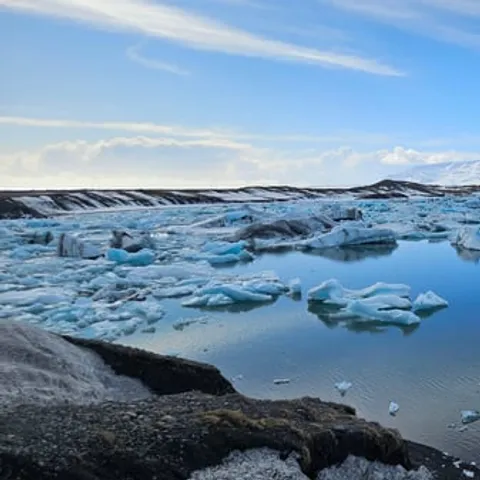
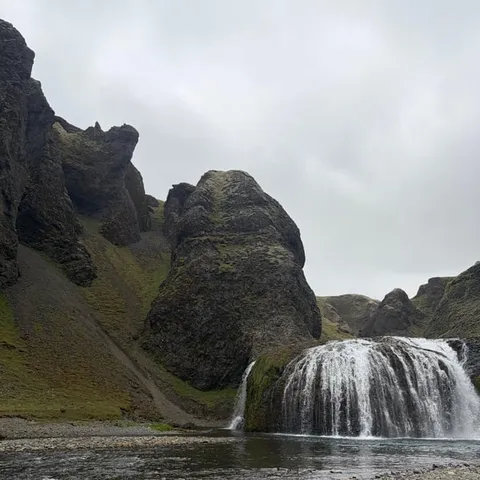
Breiðamerkurjökull is an outlet of Vatnajökull and the glacier that feeds Jökulsárlón glacier lagoon.
Is a guided day tour the right way to shoot Jökulsárlón?
Pre-booking checklist
On the day
- Windproof layer and gloves: wind and spray make the lagoon feel far colder than Reykjavik.
- Polarising filter and two microfibre cloths, one for the lens and one for the filter.
- Public toilets and a café are available at Jökulsárlón.[9]
- Bring a small dry bag and keep your camera inside your jacket between stops.
Light and season on a fixed day tour schedule
Photography at Jökulsárlón rewards planning more than gear. A glacier lagoon webcam flattens the place, and the scale of the ice, the wind off the water and the way black sand and white ice share one frame only land in person. The Reykjavik: Jokulsarlon Glacier Lagoon & Diamond Beach Tour runs 14 hours, from US$232, with pickup options and free cancellation up to 24 hours in advance.[1] Decide before you board what you most want to shoot.
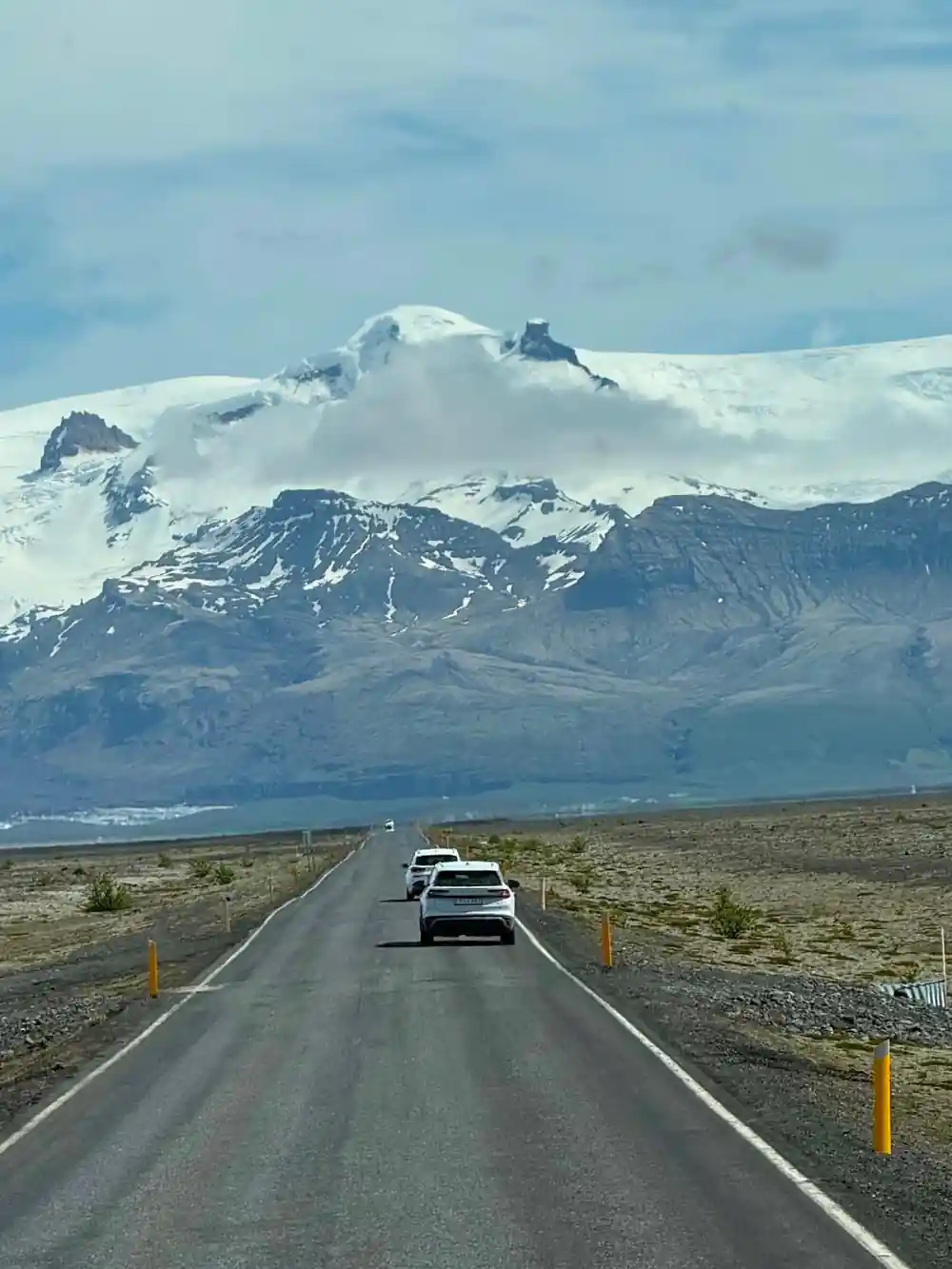
Geography sets the shape of the day. Jökulsárlón sits 236 miles (380 kilometers) east of Reykjavík along Route 1, a five-hour direct drive or seven to eight hours with South Coast sightseeing stops.[6] From Vík the lagoon is still 192 kilometers (118 miles) one way.[10] On a coach those miles belong to somebody else, and the day runs to one timetable. Hotel Jokulsarlon is an accommodation option near the lagoon[11] if you would rather stay out east and shoot in more than one kind of light.
The season decides what you can do on the water. The amphibian boat tour season at Jökulsárlón runs May-Nov and the trip takes 30-40 minutes.[2] The Jökulsárlón Zodiac Boat Tour is priced from 16,900 ISK and the boat tour lasts 1 hour 15 minutes, with total duration about 2 hours.[3] Ice caves in the Vatnajökull region are only accessible during the winter months, from November and usually throughout March, depending on the weather.[12] Kayaking is allowed on Jökulsárlón Glacier Lagoon during the summer season.[13]
Metering ice and black sand in the same frame
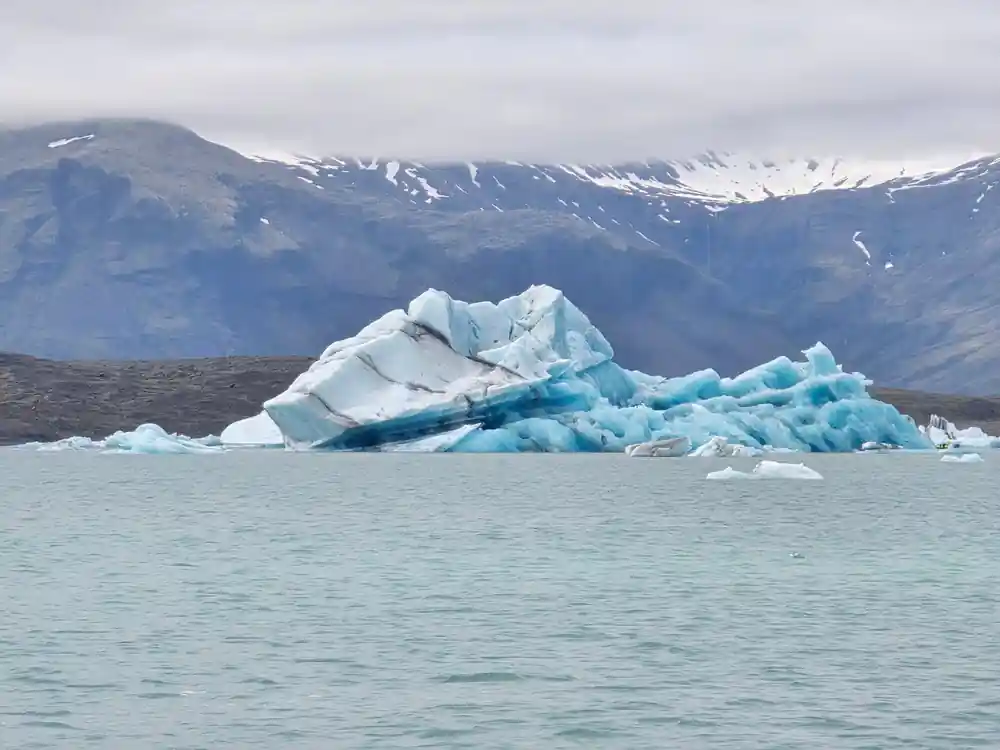
Nothing else on this coast asks as much of a light meter. Your brightest subject is lit ice, your darkest is wet volcanic sand, and both can sit in the same viewfinder. Jökulsárlón is 248 meters (814 feet) deep and is the deepest lake in Iceland.[5] Behind the ice the water still reads dark rather than bright, which pushes the contrast in your frame further than you expect.
Expose for the ice and let the sand fall into shadow, then lift the shadows when you edit. Spot metering on a bright chunk of ice, or exposing to the right while you watch the histogram for clipped highlights, keeps texture in the ice instead of turning it into a white hole. Bracket a stop either way in hard light. Cards are cheap, and you cannot come back for a second attempt the same evening.
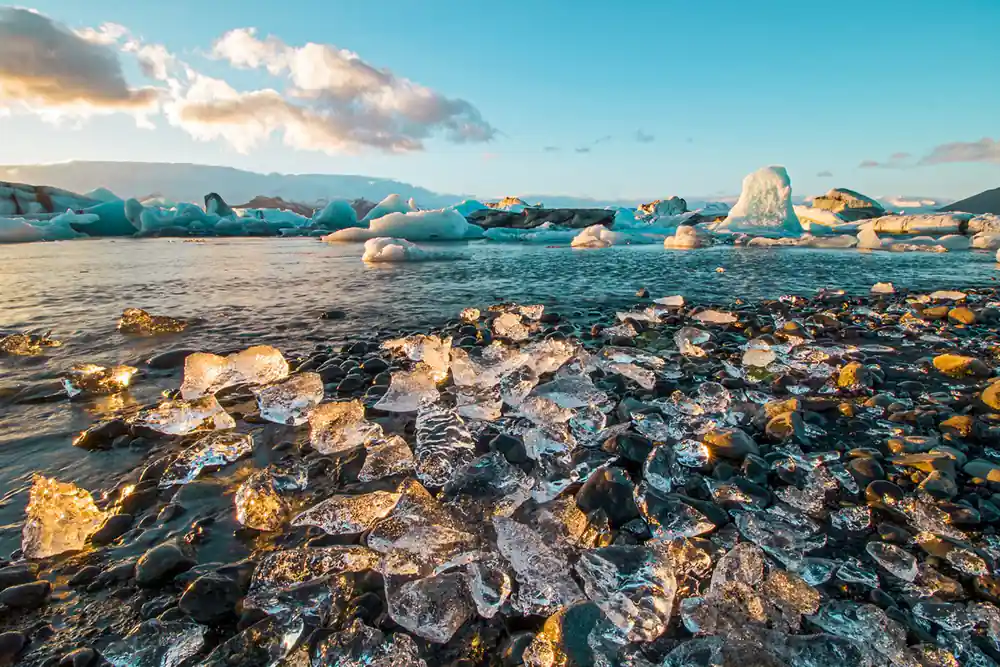
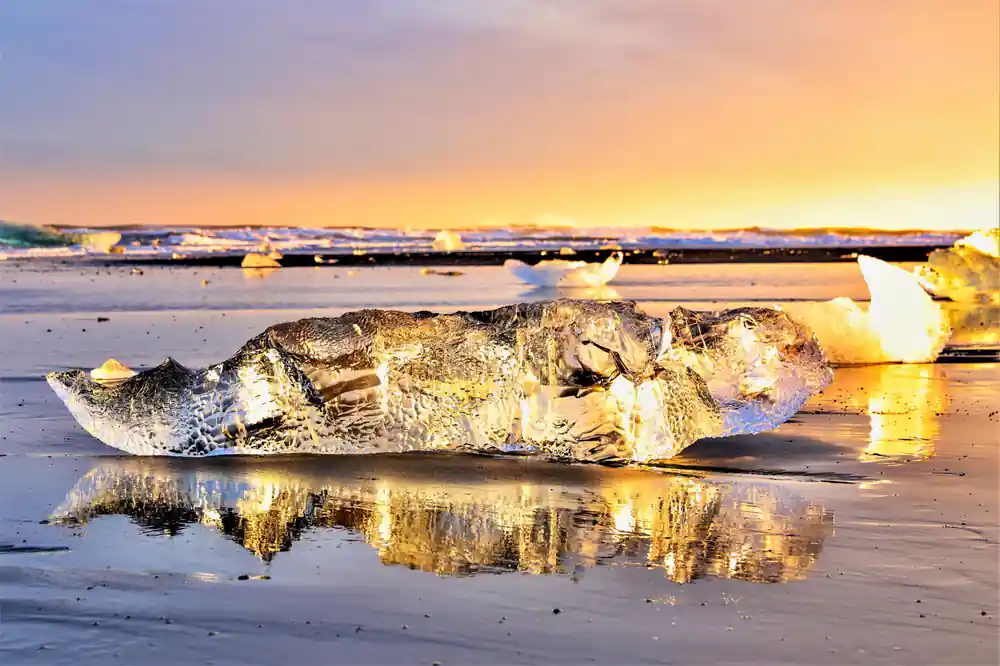
Diamond Beach is where that contrast becomes the whole picture. It is a black volcanic sand beach in Southeast Iceland scattered with clear glacial ice that breaks off from Breiðamerkurjökull, drifts through Jökulsárlón Glacier Lagoon and washes ashore along the coast.[14] Breiðamerkurjökull is the outlet glacier that feeds the lagoon,[15] so the ice on the sand has drifted through the lagoon from that same glacier. Shoot the two places as one story.
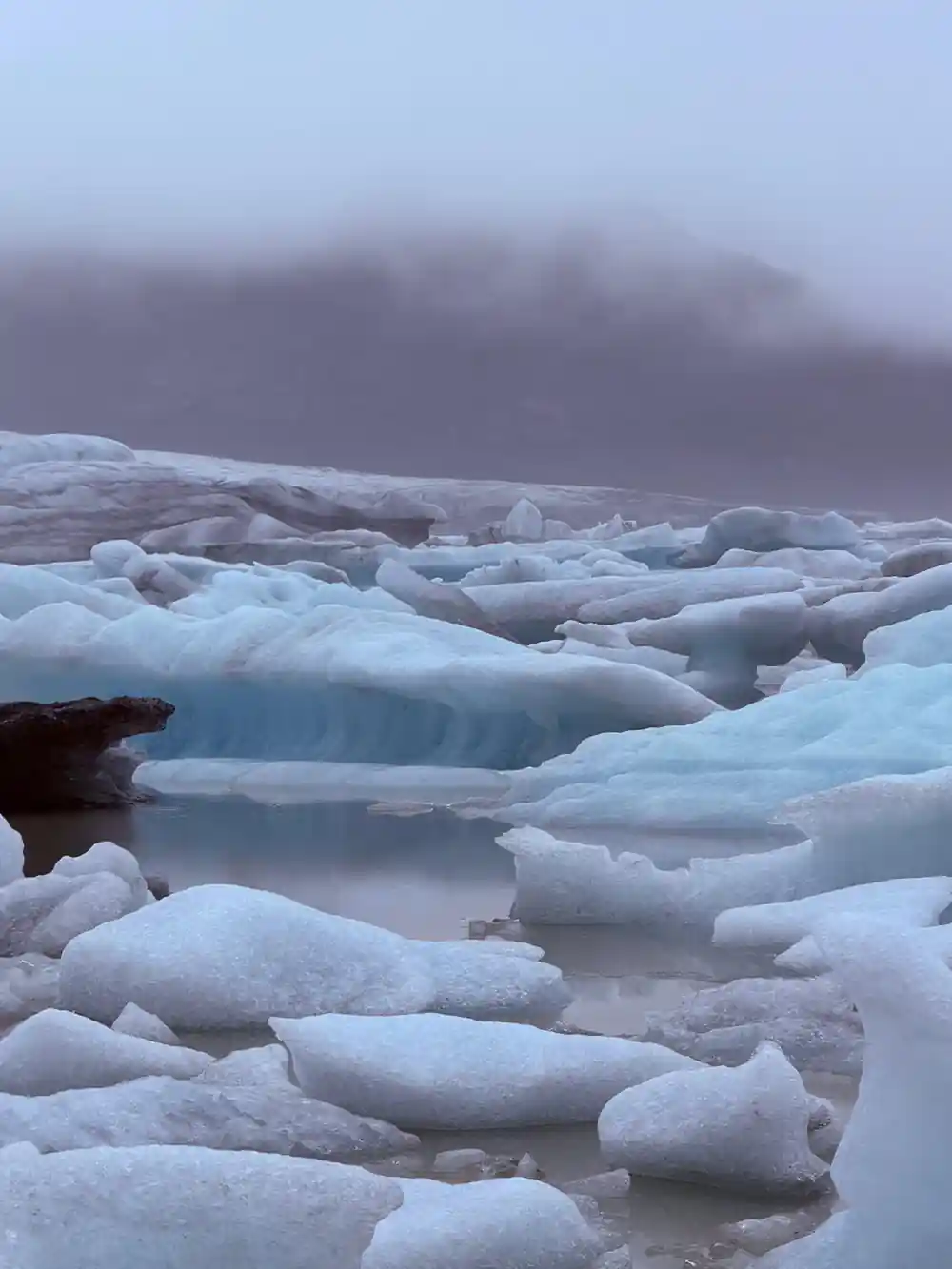
Ice on black sand at Diamond Beach, waiting for the light to move.
Managing glare and white balance in bright ice
Ice is a mirror. In flat light it reads blue-grey, in direct sun it blows out, and a wet surface throws the sky straight back at you. A polarising filter calms the sheen on wet ice and on the water, so you see into the ice rather than only the reflection on top of it. It costs you light, so keep some shutter speed in hand and rotate the filter until the reflections settle.
White balance decides whether a lagoon photograph feels cold and clear or muddy. Auto white balance tries to neutralise both the blue in shaded ice and the warm tone of low sun on sand, and you end up with a compromise you did not choose. Fix the white balance, shoot raw, and correct on the computer, where you can watch how the blues and the sand tones behave together.
Midday is the hardest light of the day: hard sun, high contrast, and spray drying on the front element. Overcast weather suits close studies of ice on the beach and long, patient compositions. Public toilets and a café are available at Jökulsárlón,[9] a useful stop for changing batteries, warming your hands and wiping water off your filter before the drive back west.
Photographing seals from the shore and the water
Seals are sighted on a regular basis at Jökulsárlón Glacier Lagoon. You might see them at a distance from the shore, or get nearer to them from out on the water.[4] A seal's head breaking a dark surface is a small subject in a large landscape, so treat it as a wildlife frame rather than a view: long lens, fast shutter, focus kept on the eye.
From the bank, a telephoto and patience do the work. Seals surface, look around and drop again, so set your focus on a patch of water and wait instead of chasing. Keep your distance and keep quiet, and never crowd an animal resting on the ice. A distant frame you actually got beats a close frame that sent it under.
From a boat you get a lower angle and much less time, and the hull moves even when the seal does not. Raise the shutter speed, brace your elbows against the gunwale rather than resting the lens on it, and level the horizon later on. In low light accept a higher ISO: a sharp, slightly noisy seal is a better photograph than a clean blur.
from US$232
The Jokulsarlon and Diamond Beach day tour from Reykjavik runs 14 hours, with pickup options and free cancellation.[1]
Shooting safely from the boat and protecting gear from spray
Boat tours put you among the ice rather than beside it, and both options are short. The amphibian boat tour season at Jökulsárlón runs May-Nov and the trip takes 30-40 minutes.[2] The Jökulsárlón Zodiac Boat Tour is priced from 16,900 ISK and the boat tour lasts 1 hour 15 minutes, with total duration about 2 hours.[3] Check which one is running on your date.
Spray is the real enemy, not the cold. A dry bag for the camera between shots, a microfibre cloth in a zip pocket and a rain cover you actually fit are worth more than a spare lens. Keep the camera inside your jacket while the boat is moving and bring it out for the shot, then wipe the front element before the water dries into streaks.
On board, stay seated when the driver asks, keep your strap around your neck or wrist, and let the boat do the moving. Bags loose on the floor trip people, and leaning out for a lower angle puts both you and your camera at risk. The crew knows the water, and their instructions beat any composition you had planned for that minute.
Tripods and composition within a coach timetable
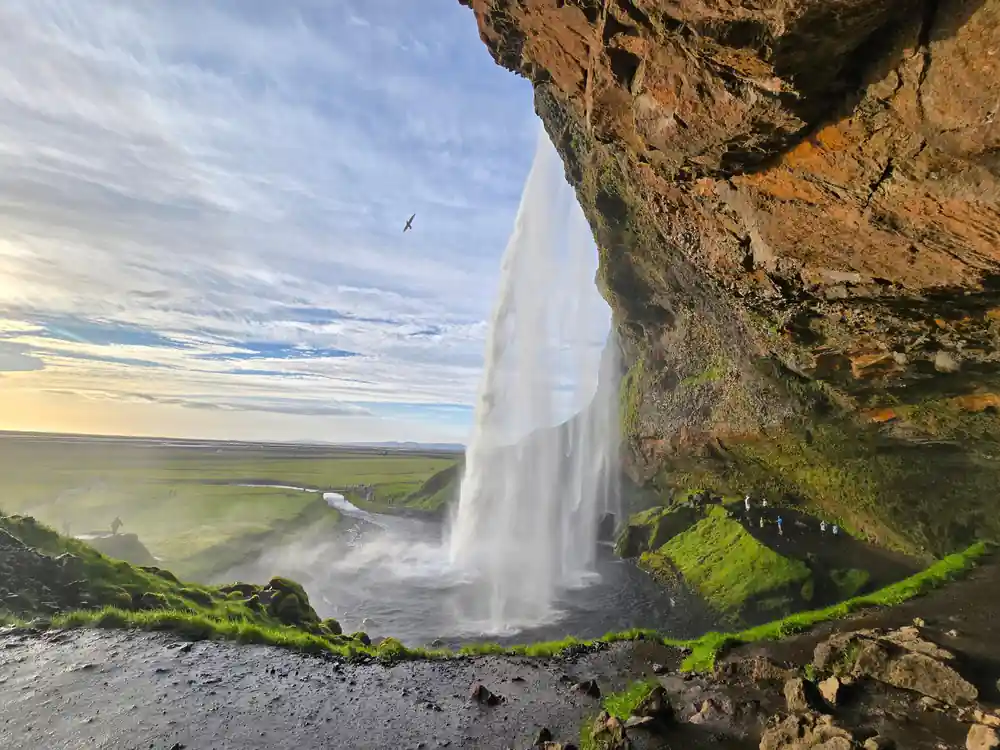
A tripod earns its place at the lagoon only when you have time to set it up. On a coach day the stops are fixed, and this itinerary lists Hvolsvöllur, Kirkjubæjarklaustur, Jökulsárlón, Vík and Seljalandsfoss, with 30 drop-off locations.[1] The day runs to a clock that is not yours, so pick one or two frames before you step off the bus and set up somewhere you are not blocking other people.
Composition matters more than equipment here. Use a lump of ice as a foreground, let the lagoon's icebergs stack into layers behind it, and put a person in the frame now and then for scale. Long lenses compress those layers into a clean pattern. Wide lenses show how small a person looks beside the ice, which is the honest version of the scene.
In wind, a light travel tripod is barely steadier than your hands, so weight it with your bag and keep the legs low. Where tripods are awkward in the crowd at the main viewpoint, a folded jacket under the camera on a rock or a wall does most of the job, and it packs away in seconds when the coach starts loading.
Finding the classic Jökulsárlón angles and Diamond Beach's best icebergs
The main Jökulsárlón glacier lagoon viewpoint sits near the car park and the bridge, and it is the busiest. Walk a few minutes along the bank and the same icebergs rearrange themselves with far fewer people in the frame. A quieter glacier lake viewpoint further along gives you the water, the ice and the outlet glacier in one line, which is the composition most people come for.
At Diamond Beach the ice is never arranged the same way twice, so walk the whole strip before you commit to a spot. Get low for ice on black sand, watch the waves rather than your screen, and never turn your back on the sea. Shoot the ice and the water in one frame, and the black sand gives you a clean, dark background for bright ice.
Jökulsárlón glacier lagoon was used as a filming location for A View To A Kill, Die Another Day and Lara Croft: Tomb Raider.[16] It also changes constantly: icebergs drift, melt and roll over, so the best glacier lagoon photos come from working one spot for a while rather than sprinting between viewpoints.
How long the Reykjavik glacier lagoon day tours last
Day tour from-prices per person
US dollar from-prices per adult on GetYourGuide; no child prices are listed.[1][7][8][17]
When to plan your lagoon shoot
Plan your shoot
Book the day tour
Reserve the Reykjavik: Jokulsarlon Glacier Lagoon & Diamond Beach Tour and check the starting time for your date.
Pack for spray
A polariser, two microfibre cloths, a dry bag and a windproof layer cover most of what this coast throws at you.
Work one viewpoint
Pick a single frame at the lagoon and stay with it. Ice drifts, and the coach will not wait while you wander.
Cross to Diamond Beach
Walk the strip first, then get low for ice on black sand and keep one eye on the waves at all times.
Edit for contrast
Keep the ice bright, lift the sand gently, and resist heavy clarity that makes wet black sand look grey.
See Jökulsárlón and Diamond Beach in one long day
from US$233Reserve now & pay later