The main points
- Wind off the ice is what makes the lagoon feel sharp, so plan for wind first and sunshine second.
- Diamond Beach is wet black sand and slippery ice, and the waterfall stops are wet underfoot too.
- A base layer, a warm mid layer and a windproof shell cover almost everything the day can do.
- The Reykjavik: Jokulsarlon Glacier Lagoon & Diamond Beach Tour is listed as a 14-hour day from US$232.[1]
- Cancel up to 24 hours in advance for a full refund, and reserve now with payment later.[1]
- Top choice Jokulsarlon & Diamond Beach from US$232 Duration14 hours[1]Rating4.67 from 3,935 reviews[1]GuideLive guide in English[1]CancellationCancel up to 24 hours ahead[1] Check availability
- South Coast & Diamond Beach from US$231 Duration14.5 hours[2]Rating4.54 from 1,494 reviews[2]GuideLive guide in English[2]CancellationCancel up to 24 hours ahead[2] See this tour
- Lagoon boat ride day tour from US$288 Duration14 hours[3]Rating4.61 from 268 reviews[3]GuideLive guide in English[3]CancellationCancel up to 24 hours ahead[3] See this tour
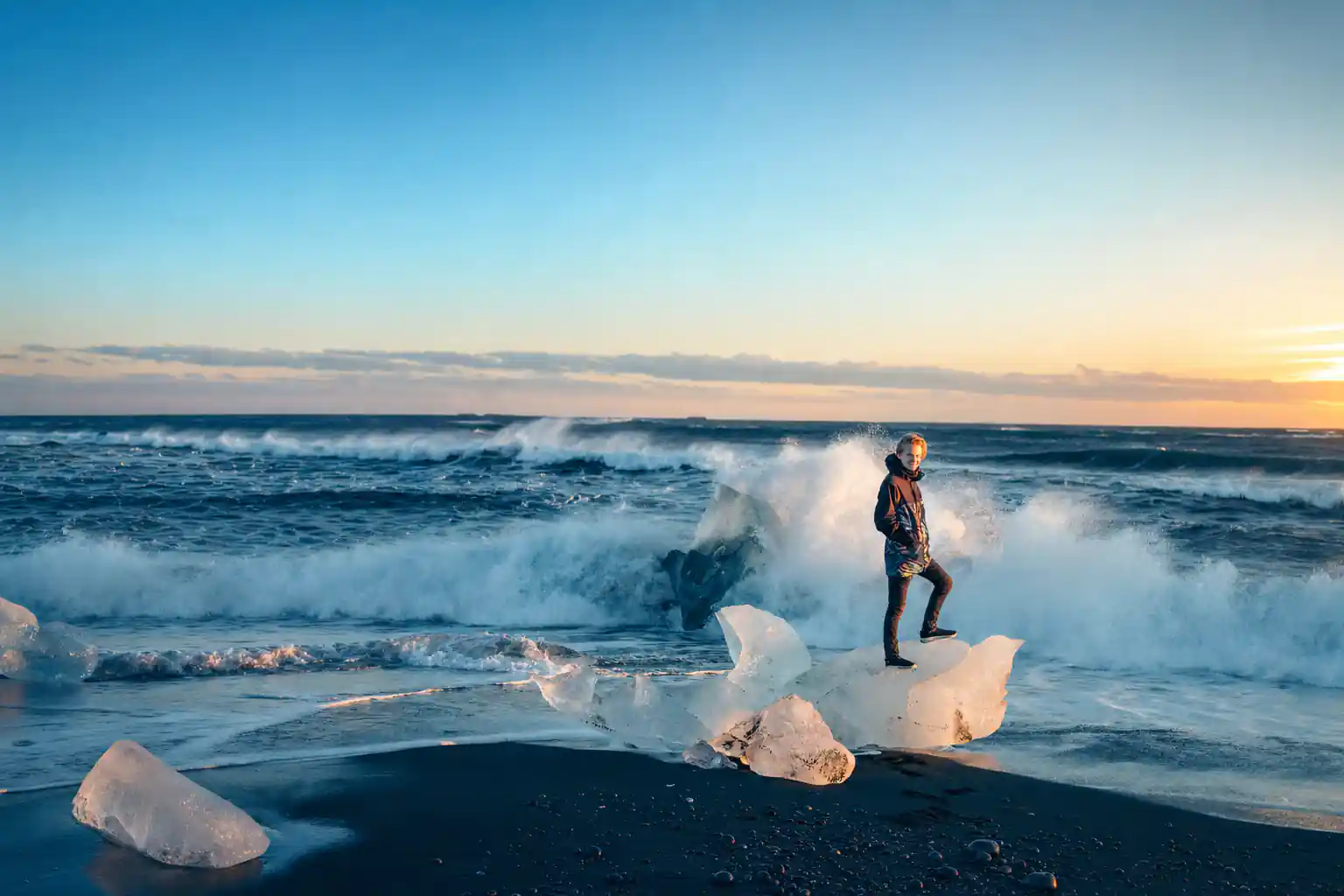
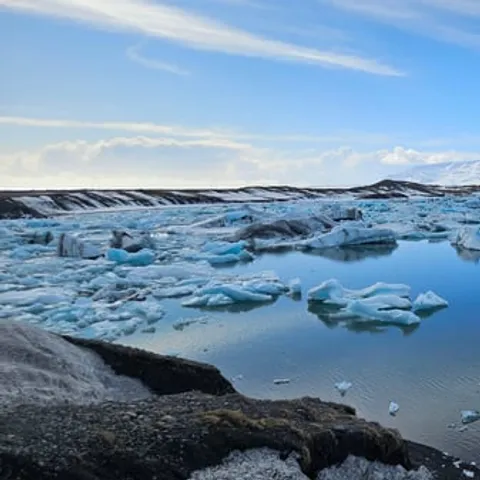
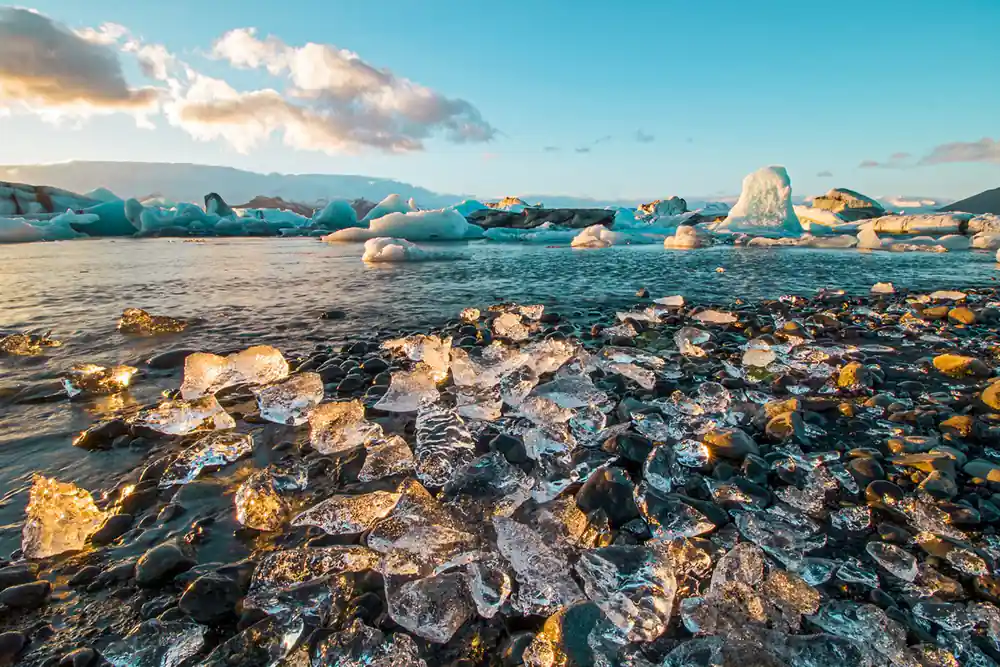
Diamond Beach in Southeast Iceland is known for its black volcanic sand scattered with clear glacial ice. These ice fragments break off from Breiðamerkurjökull, an outlet glacier of the Vatnajökull ice cap, drift through Jökulsárlón Glacier Lagoon, and wash ashore along the coast.
Is the Jokulsarlon day tour worth packing for?
What to wear
- A windproof and waterproof shell with a hood you can tighten
- A warm mid layer and a spare pair of gloves for windy stops
- Sunglasses for glare off ice, water and wet sand
- Packable waterproof trousers for waterfall spray
In your bag
- Your booking confirmation and pickup details for the morning
- A refillable water bottle and snacks for the long drives
- A dry bag or waterproof pouch for your phone and camera
- A small day bag that travels with you and stays on the coach
Glacier Lagoon Temperature: What the Cold Air Feels Like
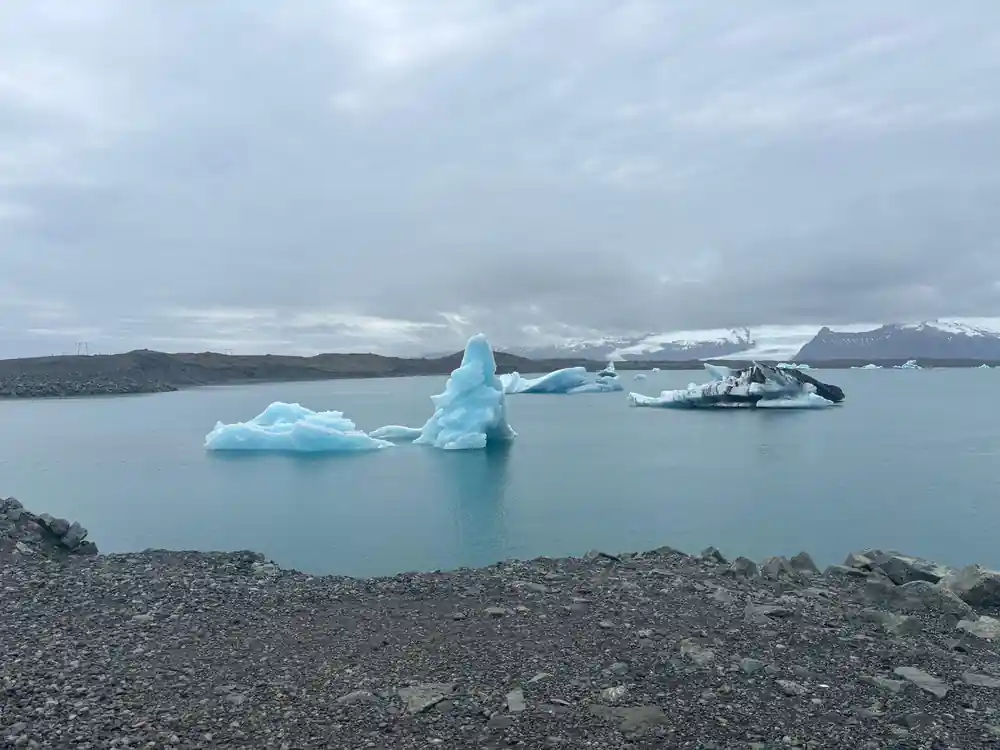
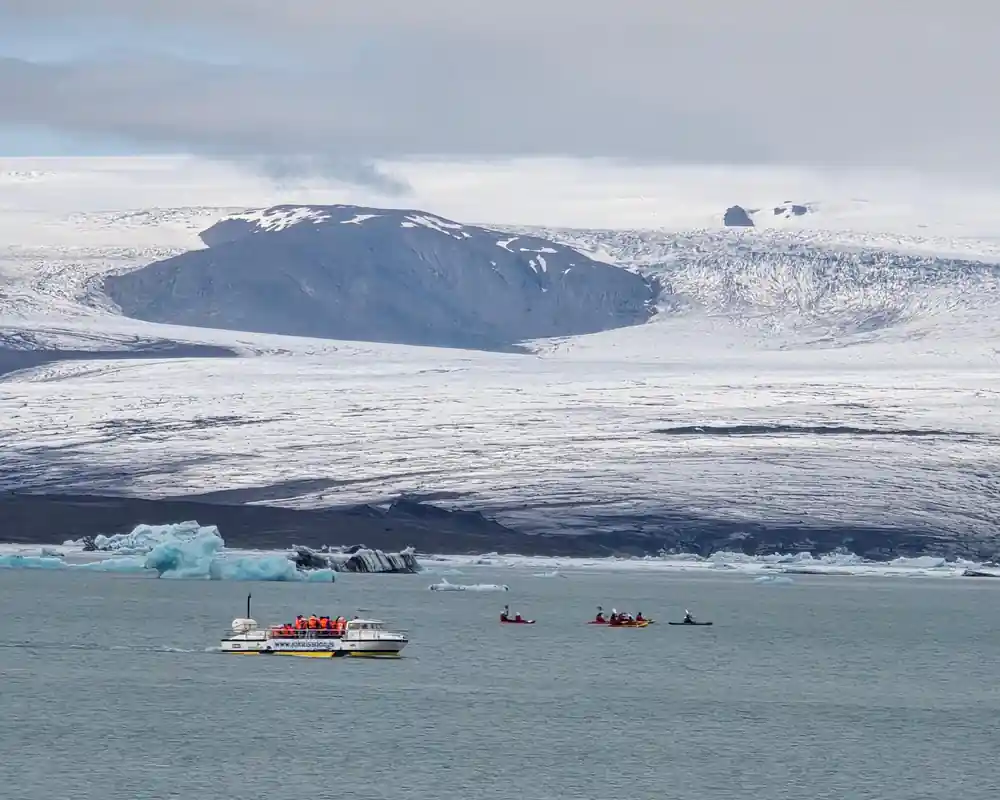
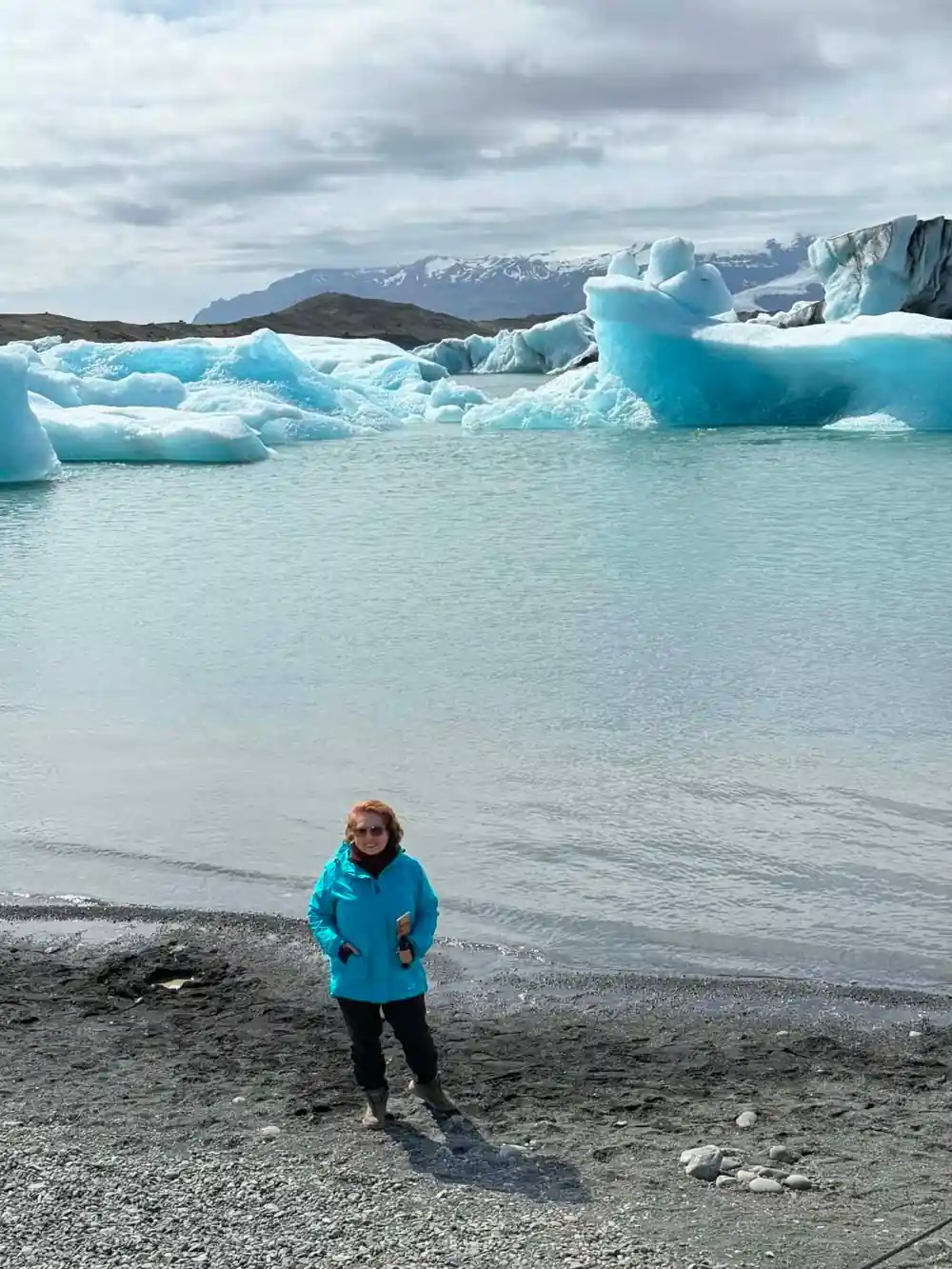
Jökulsárlón sits where the Breiðamerkurjökull outlet glacier reaches the water, and the air around the lagoon carries the cold of all that ice. Travellers step off the coach in a light shirt on a bright afternoon and are back at their bag for a jacket within minutes. Wind does most of the work. It runs along the south coast, crosses the open water and turns a mild day into a sharp one, so plan for wind first and sunshine second.
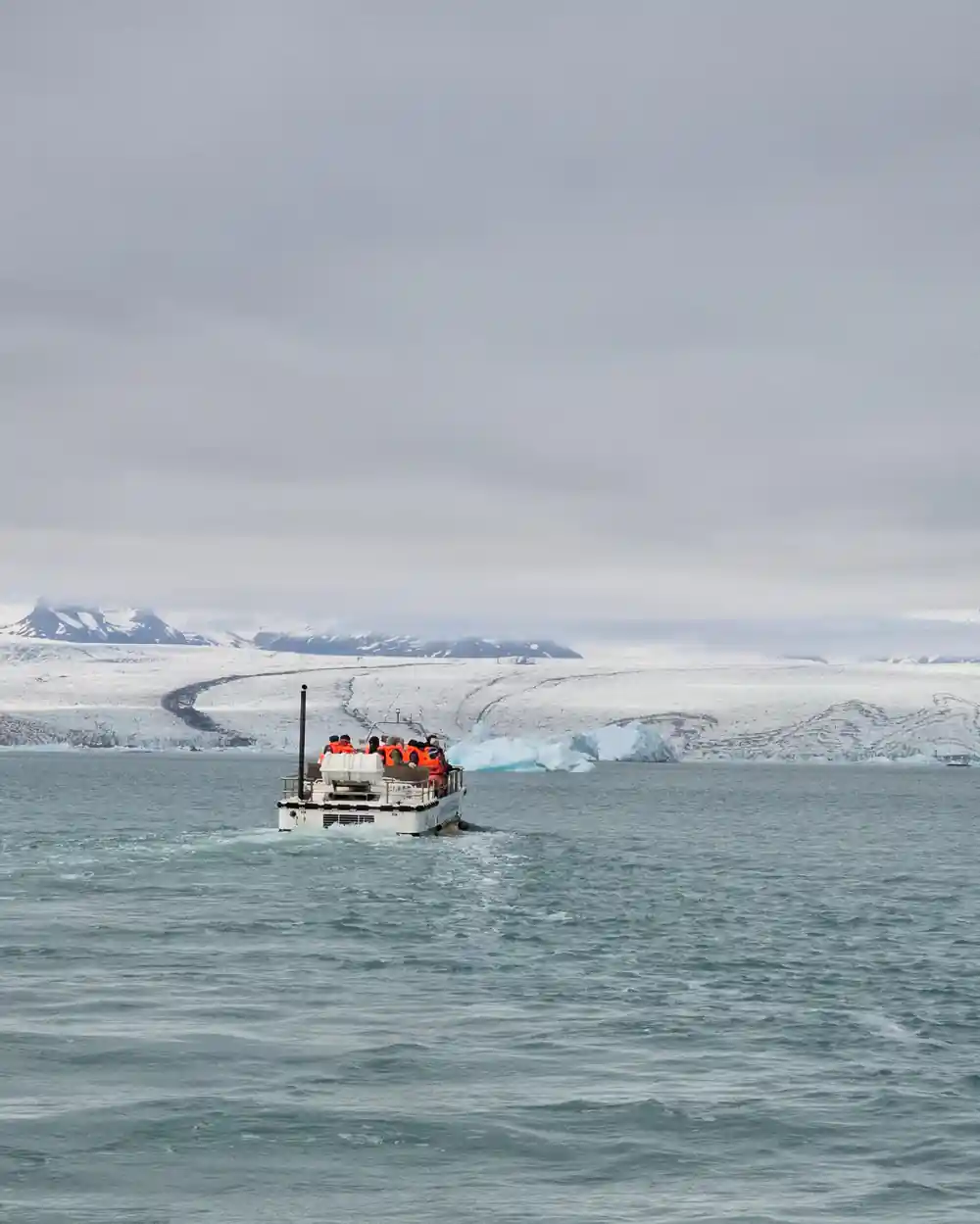
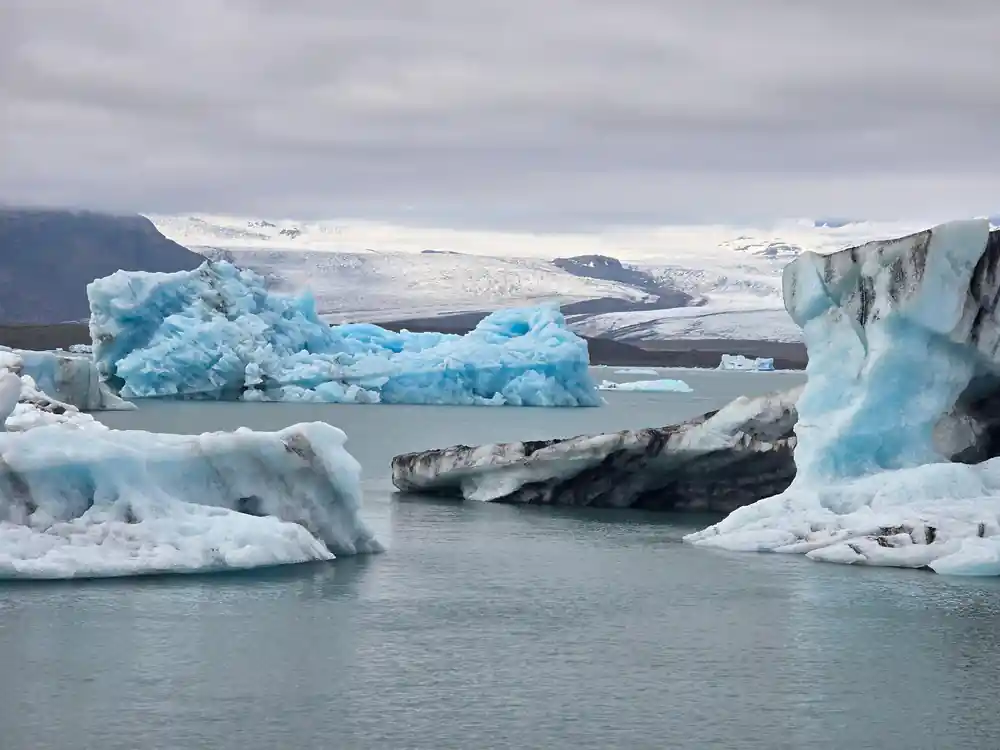
The lagoon is 248 meters (814 feet) deep and is the deepest lake in Iceland.[4] It is fed by Breiðamerkurjökull, the Vatnajökull outlet glacier that pushes ice into the water.[5] Seals are sighted on a regular basis here, often at a distance from the shore, and a boat trip brings you nearer to them.[6] Deep water, drifting ice and cold air all sit in the same view, so pack for that rather than for the temperature on your phone.
The day is long, so dress for the coldest and windiest stop rather than for Reykjavík at breakfast time. Jökulsárlón is 236 miles (380 kilometers) east of Reykjavík along Route 1, which is a five-hour direct drive or seven to eight hours with South Coast sightseeing stops.[7] You cross farmland, pass waterfalls and run along open coastal stretches in the same outfit, and there is nowhere to change in the middle of it. A thin thermal top, a fleece or wool jumper and a windproof shell handle almost everything the day can offer.
Layer Your Clothing for Coastal Wind and Changing Skies
Start with a base layer that moves sweat away from your skin. Merino wool or a synthetic running top works well, while cotton soaks up water and then sits cold against you for the rest of the day. Over that, add a mid layer such as a fleece, a light down jacket or a woollen jumper. The outer layer does the real work: a windproof and waterproof shell with a hood you can tighten around your face. Three thin layers beat one thick coat, because you can open and close them as the coach warms up and the coast cools down.
A warm hat, thin gloves and a neck gaiter or scarf are worth keeping in your bag all year. Wind chill on the coast is the part people underestimate, and a hat that stays on in a gust is better than a loose one you have to hold on to. Spare gloves are a small luxury if the first pair gets soaked at a waterfall. Sunglasses matter as much as a hat, because glare off ice and water is strong even under a high sheet of cloud.
On the Reykjavik: Jokulsarlon Glacier Lagoon & Diamond Beach Tour there is a live guide in English, and pickup is available with options to check when you book.[1] Ask your guide at the first stop how long you have at each of the following ones and what the ground is like underfoot. That conversation takes a minute and saves a lot of standing around in the wrong shoes.
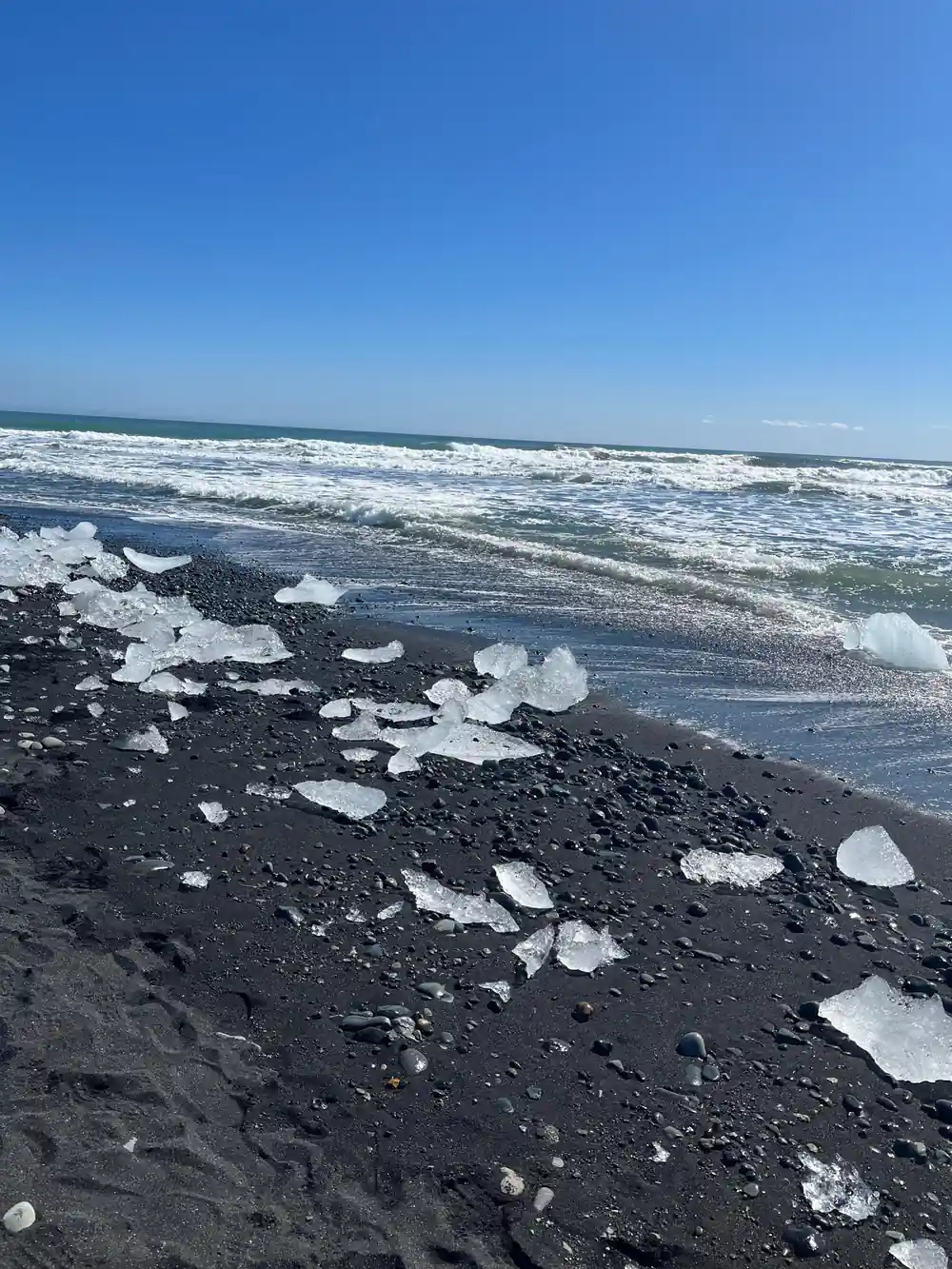
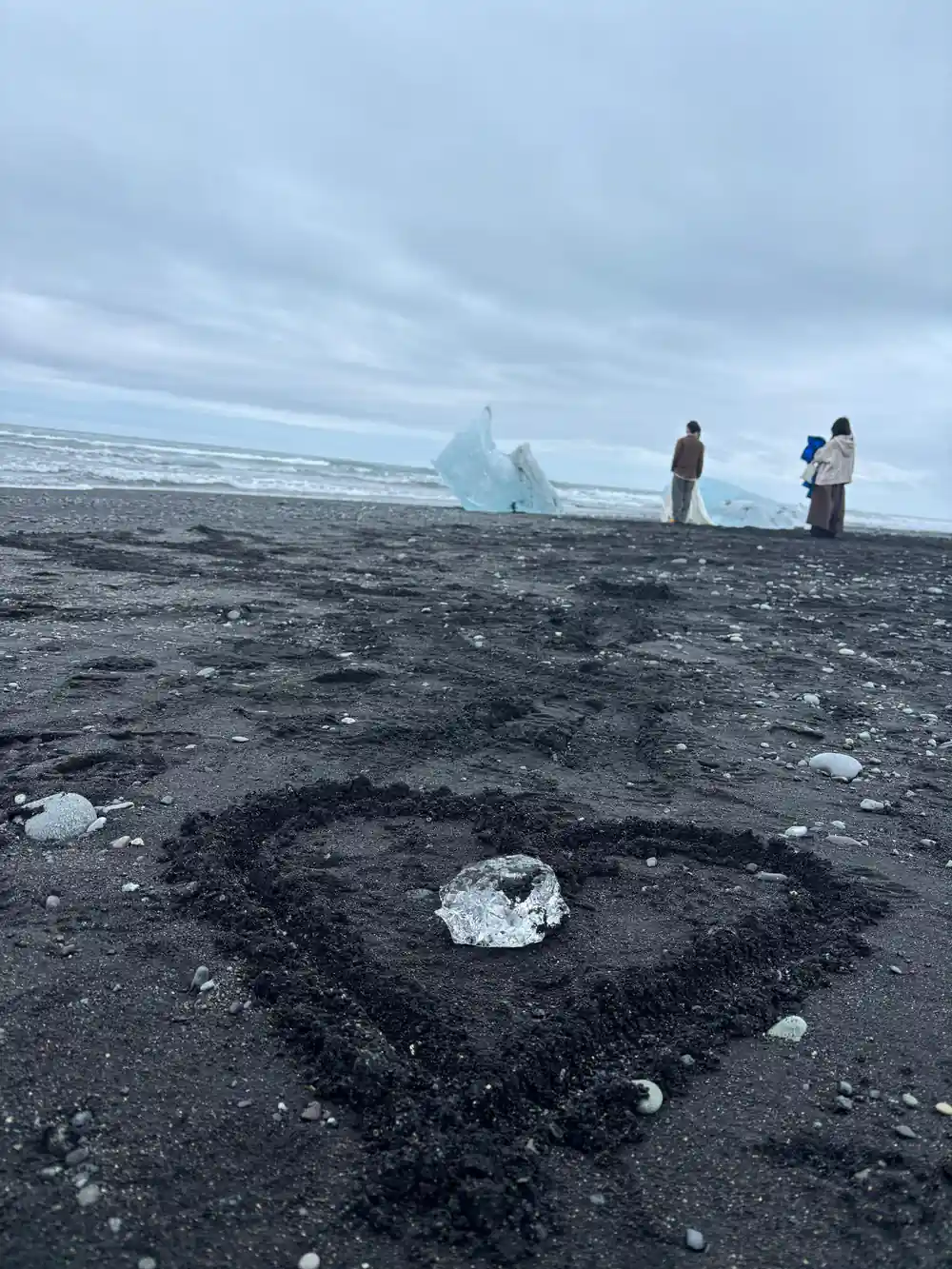
Ice chunks on the black sand at Diamond Beach in low morning light
Footwear That Grips Wet Black Sand and Slippery Rock
Diamond Beach is a black volcanic sand beach in Southeast Iceland, scattered with clear glacial ice that breaks off from Breiðamerkurjökull, drifts through Jökulsárlón Glacier Lagoon and washes ashore along the coast.[8] In practice you are walking on wet, gritty sand among slippery lumps of ice, often with a strong onshore wind pushing at you. This is the stop where the wrong footwear shows up immediately.
Choose boots with a deep tread, a waterproof upper and enough ankle support for uneven ground. Trail shoes with a good grip work on dry days, but sand and spray will find their way through mesh uppers. Leave the smooth-soled trainers, the fashion boots and anything you would rather keep clean at the hotel. If you own hiking boots, wear them a few times before the trip, because a long day on a coach is not the moment to test new shoes.
Take a spare pair of socks in a dry bag and leave them on the coach. Wet feet on the return drive are miserable, and the change takes seconds at the door. If you walk close to the water at Diamond Beach, keep an eye on the waves, which arrive without much warning and carry more force than they look. Stay back from the tideline when the swell is up and let the ice come to you.
Waterproofs for Waterfall Spray and Ocean Mist
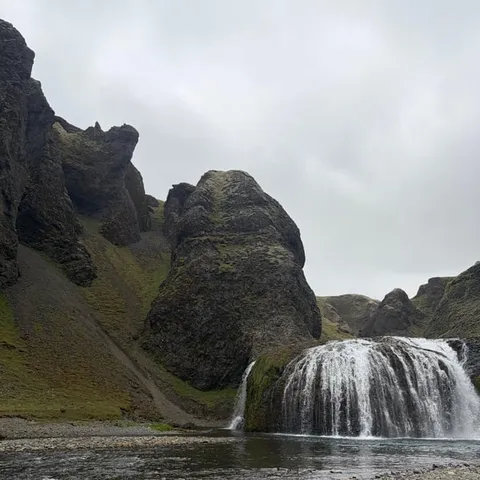
The day tour stops include Hvolsvöllur, Kirkjubæjarklaustur, Jökulsárlón, Vík and Seljalandsfoss along the route.[1] At the big waterfalls the spray carries well beyond the path, and on the coast the mist comes at you sideways. A rain jacket with a hood keeps your top half dry, but packable waterproof trousers are what let you walk out to the water and then sit down on the coach without spending hours in damp jeans.
Choose a light shell rather than a heavy coat, and check that the hood has a drawcord you can pull tight. A waterproof cover for your backpack, a dry bag for your phone and a small microfibre cloth for your camera lens all weigh almost nothing and make a wet stop far easier. If you prefer a poncho, take one that reaches your knees, because the short ones lift in the wind and leave your legs exposed.
from US$232
A coach day tour from Reykjavik to Jökulsárlón and Diamond Beach with a live English-speaking guide, free cancellation and pay-later booking.
Camera Gear for Bright Ice and Dark Sand
Jökulsárlón has appeared on screen in A View To A Kill, Die Another Day and Lara Croft: Tomb Raider.[9] Photographing it comes down to contrast: white ice and grey sky against black volcanic sand. Meter for the brightest ice and let the sand fall dark, or bracket your shots and pick the frame later. A polarising filter cuts glare off the water, though it also deepens the sky, so check the result on the back of the camera before you commit to it.
Cold drains batteries faster than you expect, so carry a spare and keep it in an inside pocket instead of a cold camera bag. A microfibre cloth and a small blower deal with spray on the front element, and a plain plastic bag over the camera is enough if the mist turns to rain. For the seals and the ice at a distance, a modest zoom earns its place here.
Phone photographers are well served too. Tap to meter on the ice, then drag the exposure slider down a little so the whites hold their detail, and keep the phone in a waterproof pouch between shots. If you want a picture of yourself, ask a fellow traveller at the water's edge. People swap cameras all day at this stop and are usually happy to help.
Food, Water, and Snacks for a Long Coach Day
Public toilets and a café are available at Jökulsárlón.[10] Between stops there is a lot of open country, and the day is built around long drives with short walks. Bring a refillable water bottle and food that travels well: nuts, dried fruit, a sandwich, a couple of bars. A small flask of something hot is welcome on a cold, windy afternoon and takes up less room than most people expect.
The stretch from Vík to Jökulsárlón Glacier Lagoon is 192 kilometers (118 miles) one way.[11] That gives a good sense of the scale of the south coast, where the gaps between stops are long and the landscape changes slowly. Eat when the coach stops rather than waiting for the next town, and keep a snack in your day bag for the return leg, when the light is going and the day catches up with you.
Glacier Lagoon Iceland Weather: Hats, Gloves and Your Day Bag
Glacier lagoon weather on the south coast changes quickly, and one day can hold sunshine, rain, wind and a clear cold evening. Hats and gloves earn their place even in summer, and a buff or scarf keeps the wind off your neck when the coach door opens. Keep them near the top of your bag rather than at the bottom of a suitcase, so you can reach them without unpacking at the first stop.
Your day bag should hold water, a snack, spare socks, a hat and gloves, a waterproof layer, camera gear and any medication you need. Everything else can stay on the coach. If you would rather break the drive with a night on the coast, Hotel Jokulsarlon is an accommodation option near the glacier lagoon.[12] Staying over also puts you beside the water in the quiet hours, when the light is softer and the lagoon is at its most peaceful.
How long the Reykjavik day tours run
Listed durations for three Reykjavik day tours that include Jökulsárlón:[1][2][13]
From prices for lagoon day tours
US dollar from-prices for the lagoon day tours, taken from the listings:[1][2][3][13]
When to plan your lagoon day
Packing steps for the day
Check the forecast
Look at wind strength as well as temperature for Reykjavik, Vík and the southeast coast, and pack for the worst of the three.
Start with a warm base
A merino or synthetic base layer, then a fleece or light down jacket, then a windproof shell with a hood.
Sort out your feet
Waterproof boots with a deep tread, plus a spare pair of socks in a dry bag for the return drive.
Build the day bag
Water, snacks, hat, gloves, waterproof trousers, camera, phone pouch and any medication you need.
Leave the rest behind
Everything else can stay on the coach, so keep your bag light for the walks at the lagoon and the waterfalls.
Book the Jokulsarlon Glacier Lagoon and Diamond Beach day tour
from US$233Reserve now & pay later